This page explains the birr itself: its notes, coins and code. For where to change money and current rules, see exchanging money in Ethiopia.
The basics
The Ethiopian birr is the only legal currency in Ethiopia. Its international code is ETB, and you may see it written as Br or birr on prices. One birr is divided into 100 santim (cents). The word birr is often said to mean silver, which recalls the days when silver coins were used in trade. Silver thalers, especially the Maria Theresa thaler, circulated widely in Ethiopia before modern banknotes.
The National Bank of Ethiopia issues the currency. Since July 2024, the exchange rate between the birr and foreign currencies has been set by the market instead of being fixed, and banks and licensed bureaus publish their own rates. This means the rate you see in an old article is probably out of date.
Notes and coins
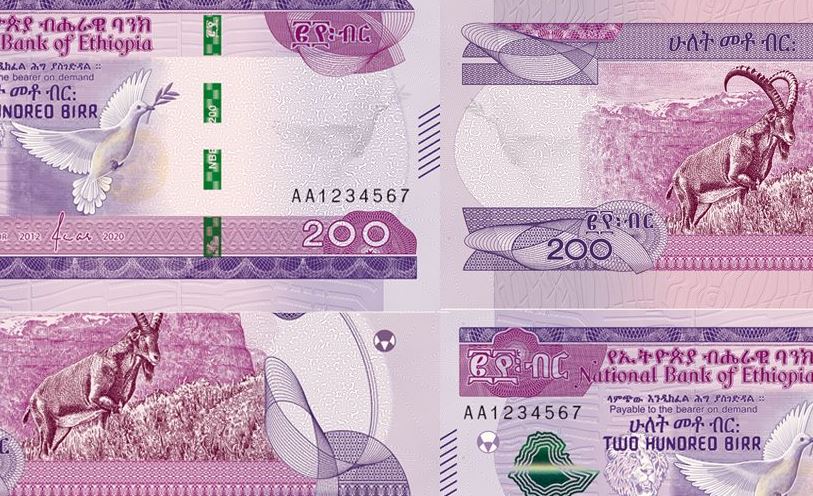
The National Bank lists notes of 1, 5, 10, 50, 100 and 200 birr as the current notes. New 10, 50 and 100 birr notes were introduced in September 2020, and a 200 birr note was added in the same year. Coins also exist, including a 1 birr coin and santim coins. In practice, you will mostly handle the 10, 50, 100 and 200 notes, with the smaller notes and coins turning up in change.
- Small notes are useful for minibuses, taxis, tips and snacks. Ask for a mix of denominations when you change money.
- The 100 and 200 birr notes are easy to carry for larger payments, but a shop or taxi driver may not have change for them.
- Torn or taped notes may be refused. Do not accept very worn notes if you can avoid it, and give the same care to the notes you hand over.
Where to get birr
The birr is not widely traded abroad, so most visitors plan to change money after they arrive, at a bank, a licensed forex bureau or an ATM. The general limit for carrying Ethiopian currency in or out of the country is 3,000 birr per trip, so there is little reason to bring birr from home. See exchanging money for the full routine and using cards and ATMs for cash machines.
Foreign currency
The US dollar is the easiest foreign cash to exchange and is quoted by every bank and bureau. Euros and British pounds are also widely exchanged, and other currencies are available at some counters. Bring clean notes in good condition, and keep your exchange receipts.
Handling money day to day
- Count your change, and keep your wallet in a front pocket or an inside pocket.
- Keep small notes in a separate pocket for fares.
- Agree prices before you start a taxi ride or a purchase at a market. Prices in markets and for guides are often negotiable. See shopping in Ethiopia.
- Spend your birr down in the last days of your trip, because changing back a large amount is slower. A tourist may change up to US$500 equivalent of birr back into foreign currency without further proof, on presenting a passport, visa and travel documents.
Frequently asked questions
What is the currency of Ethiopia?
The Ethiopian birr (ETB).
How many santim are in a birr?
100.
Can I buy birr before I travel?
It is rarely possible. Plan to change money on arrival.
Which foreign currency is best to bring?
US dollars are the easiest, followed by euros and pounds.
Are old notes still valid?
Some older notes may still be accepted, but ask a bank if you hold any.
Where do I see the current exchange rate?
On the displayed rate boards at banks and bureaus. Rates differ between them.
Last checked: 25 October 2026. Sources: National Bank of Ethiopia.
To pay with cards or withdraw cash, read using foreign cards and ATMs; for receipts and changing birr back, see currency and foreign exchange.