Updated October 2026.
An Ethiopian menu may list unfamiliar dishes ending in wat, tibs and firfir, often without pictures. The dishes below are good starting points, with notes on what they contain and how spicy they are. For the basics of eating with injera and the fasting calendar, read things to know about Ethiopian food.
Injera, the base of every meal
Injera is a large, soft flatbread with a slightly sour taste. It is made from teff, a tiny grain grown in the highlands. Stews are served on top, and diners tear off pieces with the right hand to pick up the food. The sourness becomes milder as the bread absorbs the stew.
Stews (wat and alicha)
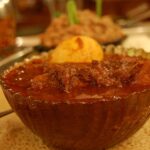
- Doro wat. Chicken slow-cooked for hours with onions, berbere chilli and spiced butter, then served with a hard-boiled egg. This national dish is central to holiday meals. Its flavour is rich, with less heat than its deep red colour may suggest.
- Key wat. Beef in the same deep red berbere sauce.
- Misir wat. Red lentils cooked with berbere. It is vegan, inexpensive and found on almost every menu.
- Shiro. A smooth, thick stew made from ground chickpeas or broad beans. It often arrives bubbling in a clay pot and is everyday comfort food in Ethiopia.
- Alicha. Mild stews seasoned with turmeric instead of chilli. Yemisir alicha (lentils) and doro alicha suit children and diners who prefer less spice.
Meat dishes
- Tibs. Pieces of beef or lamb fried with onion, peppers and rosemary. Shekla tibs arrives sizzling in a clay dish. Its familiar ingredients make tibs an easy choice for a first meal.
- Kitfo. Minced beef mixed with spiced butter and mitmita, a hot chilli powder. It is traditionally eaten raw. Ask for leb leb (lightly warmed) or yebesele (fully cooked) if you prefer.
- Gored gored. Cubes of raw beef served with spiced butter and chilli. It is a local favourite. Raw meat carries risk, so choose a well-known restaurant and order it only if you are comfortable with that risk.
Vegetarian and fasting food
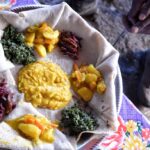
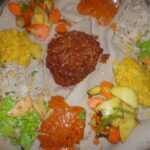
- Beyaynetu. A selection of five to ten vegan dishes served on one injera, often including lentils, split peas, cabbage, greens, beetroot and shiro. It offers several flavours in one meal and is especially common on Wednesdays and Fridays, when much of the country fasts.
- Gomen. Collard greens cooked with garlic and ginger.
- Atkilt. Cabbage, potato and carrot, mild and gently spiced.
- Azifa. A cold green lentil salad with mustard and chilli.
Breakfast dishes
- Ful. Mashed fava beans with onion, tomato, chilli and oil, eaten with bread.
- Firfir. Torn injera tossed in a spiced sauce. Chechebsa, also called kita firfir, uses flatbread, butter and berbere instead and is often topped with honey.
- Genfo. A thick barley porridge served with a well of spiced butter in the centre.
Drinks
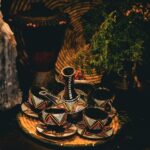
Coffee may come from a ceremony or as an Italian-style macchiato, a speciality of Addis cafés. Fresh juice called spris layers avocado, mango and papaya and can feel like a meal by itself. Tej is honey wine, while tella is a home-brewed barley beer.
Ordering tips
- Plates are usually shared. Two or three dishes can serve the table, with extra injera if needed.
- Ask for food “yale berbere” (without chilli) if you need it mild.
- Wash your hands before eating. Restaurants usually have a sink or bring water to the table.
- Being fed a bite by your host (gursha) is a sign of affection. Accept it.
For restaurant customs and places to eat, see eating out in Ethiopia. The full collection is under Ethiopian food and coffee.