Updated October 2026. Prices change and are not listed here.
Dire Dawa grew up around the railway. When the line from Djibouti to Addis Ababa reached the foot of the eastern highlands in 1902, a new town was laid out beside the tracks, and it became a crossroads of Oromo, Somali, Amhara, Harari and Afar people, with French, Greek, Armenian and Arab traders on top. Today it is one of Ethiopia’s largest cities, hot, flat and friendly, with shady colonial-era streets, busy markets and the old railway station at its heart. It is also the gateway to Harar, 55 km up the hill.
What to see
- The old railway station. The handsome French-built station of the original Djibouti–Ethiopia line, with its arcades and old locomotives, is the symbol of the city. The new electric railway to Djibouti and Addis Ababa uses a modern station outside the centre.
- Kezira. The oldest quarter, near the station, with tree-lined avenues, arcaded shops and villas from the early 20th century.
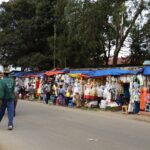
- Kafira market. A colourful traditional market where traders from the surrounding lowlands and highlands sell spices, fruit, baskets, cloth and livestock.
- Taiwan market. A maze of stalls selling imported goods, clothes and electronics, named, people say, after the origin of its first wares.
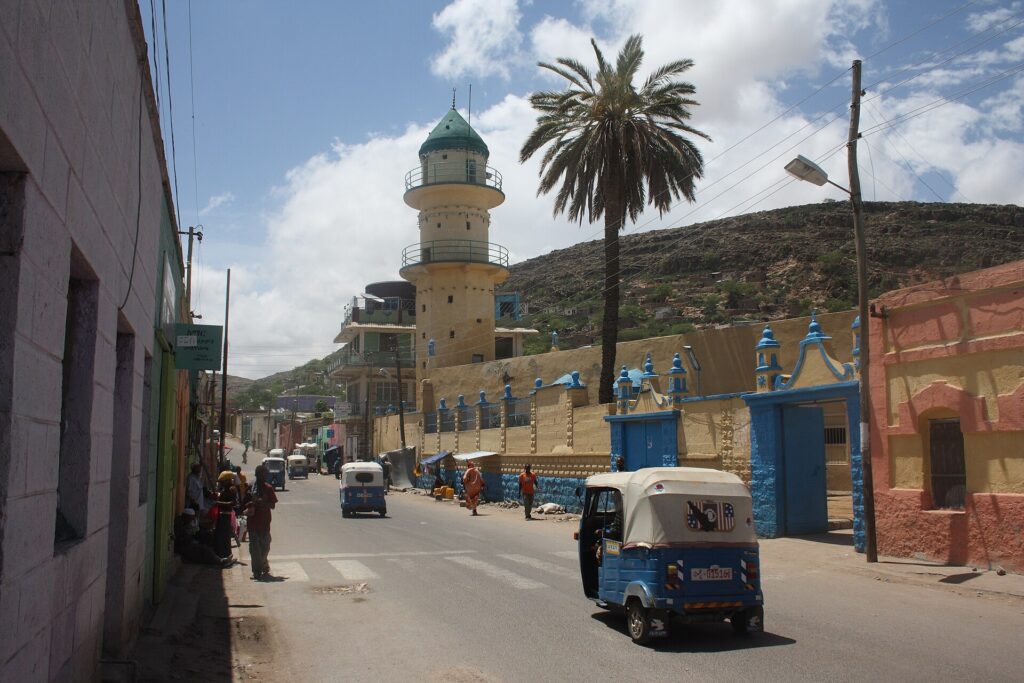
- The mosques, including the Grand Jumaa Mosque, and the evening life of the city when the heat lifts.
Around Dire Dawa
- Harar, the walled Muslim city with its alleys and nightly hyena feeding, about an hour’s drive away. Most visitors stay in Harar and pass through Dire Dawa.
- Prehistoric rock art. The hills around Dire Dawa have rock-art sites with ancient paintings of cattle and people. Ask a local guide about access.
Getting there
- By air: flights from Addis Ababa to Dire Dawa take about an hour.
- By rail: the Addis Ababa–Djibouti railway links Dire Dawa with the capital and the coast. Check the current timetable before you plan around it.
- By road: roughly 500 km from Addis Ababa, passing Awash National Park on the way.
Climate and when to go
At around 1,200 metres, Dire Dawa is much hotter than Addis Ababa, with daytime temperatures above 30°C for much of the year. The cooler months from November to February are the most comfortable. Light cotton clothes, sun protection and plenty of water are essential; see health and medical care.
Tips
- Dress modestly: much of the city is Muslim, and life slows in the day during Ramadan.
- Carry small notes for markets and bajaj (three-wheel taxi) rides; see Ethiopian birr notes.
- Ask before photographing people in the markets.
For more of eastern Ethiopia, see Harar and Awash National Park; for the rest of the country, attractions by region.