Updated October 2026. Park, boat and village-visit prices change and are not listed here.
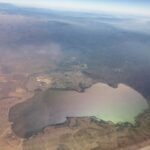
Arba Minch, about 500 km south of Addis Ababa, sits on a ridge between two of the Rift Valley’s great lakes: Abaya, the largest, tinted red-brown by sediment, and Chamo, home to some of Africa’s biggest crocodiles. Its name means “forty springs”, after the springs that feed the forest below the town. Above it rise the Gamo highlands, where the Dorze people live in tall woven houses and weave some of the finest cotton cloth in Ethiopia. Together they make one of the most rewarding stops in the south.
Arba Minch and the lakes
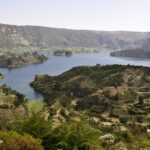
- The Bridge of God. The narrow wooded isthmus between Abaya and Chamo is known locally as Egziabher Dildiy, “God’s bridge”. The view from the hotels and viewpoints on the ridge takes in both lakes at once.
- Lake Chamo boat trips. Boats from the lakeshore visit the so-called crocodile market, a sandbank where large Nile crocodiles bask, as well as hippos, fish eagles and pelicans. Keep your hands inside the boat.
- The springs and the groundwater forest below the town, with monkeys and birds.
Nechisar National Park
Nechisar covers the isthmus, parts of both lakes and the grassy plains to the east. Its name means “white grass”, after the pale grasslands where Burchell’s zebra, Grant’s gazelle, greater kudu and many birds can be seen. Driving and walking safaris can be arranged at the park office; a 4×4 is needed on the park tracks. More parks are listed in Ethiopia national parks.
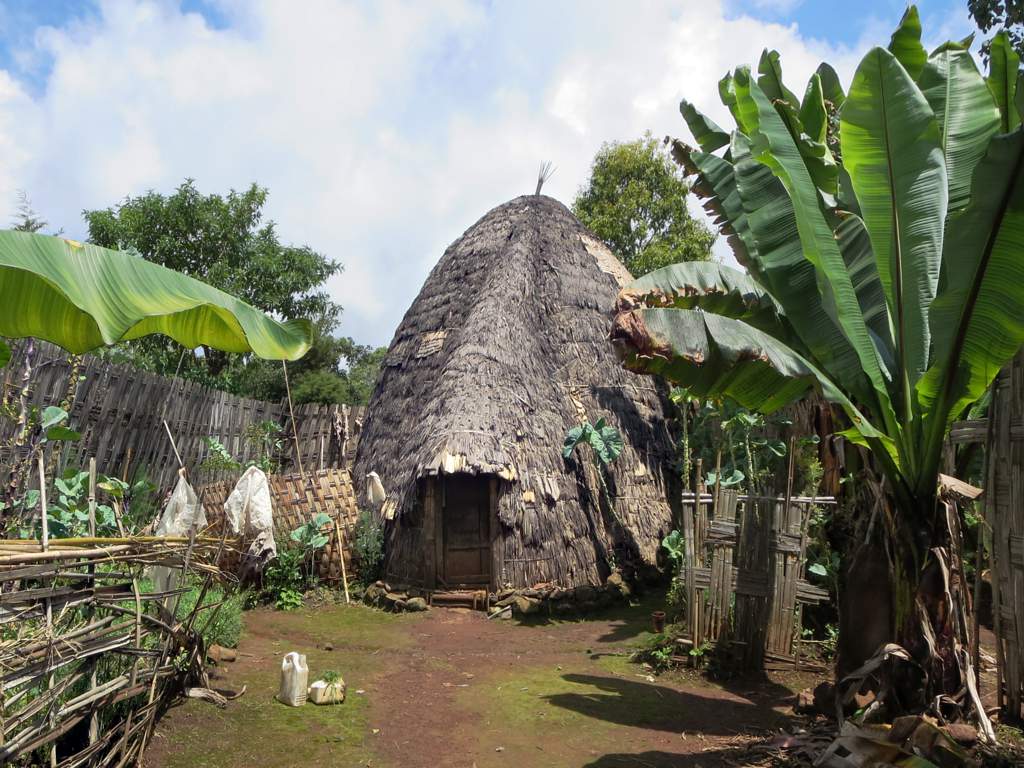
The Dorze villages
The Dorze live in the cool Gamo highlands at around 2,600–3,000 metres, a winding drive of about an hour up from Arba Minch towards Chencha. A village visit usually includes:
- The beehive houses. Made from bamboo and enset (false banana) leaves, they can be more than ten metres tall. When termites eat the base, the house is cut lower and goes on being used, so old houses get shorter over time.
- Weaving. Dorze weavers make the white cotton shamma and colourful scarves on hand looms. You can watch and buy directly from the weavers.
- Kocho. A flatbread made from fermented enset, often served with honey and a strong local spirit.
Visits are usually arranged as community tours through local guides, with a set fee per person. Ask before photographing people and homes. For respectful visiting in the south, see the advice in the Omo Valley.
Konso, nearby
About 90 km south of Arba Minch is the Konso Cultural Landscape, a UNESCO World Heritage Site of stone-walled terraces, fortified hilltop towns and carved wooden memorial statues. It makes a good stop on the way to the Omo Valley.
Getting there
- By air: flights from Addis Ababa to Arba Minch take about an hour.
- By road: about 500 km from Addis Ababa, often split with a night in Hawassa.
When to go
The dry months, roughly December to February and June to September in the south, are best for driving and park visits. Rain falls mainly from March to May and in October and November. The lake shores are hot; the Dorze highlands are cool, so bring a warm layer. Use insect repellent near the lakes and ask a travel clinic about malaria; see health and medical care.