Updated October 2026. Park fees and scout rates change and are not listed here; pay at the park gate.
Awash National Park is the most accessible savannah park in Ethiopia, about 225 km east of Addis Ababa on the road to Djibouti. In a few hours you leave the cool highlands for the hot, dry lowlands of the Rift Valley: acacia plains with beisa oryx and gazelles, a dormant volcano, a river gorge with waterfalls, and hot springs among palm trees. It works as a long day trip, but one night lets you see the animals at their most active, at dawn and dusk.
What to see
- Awash Falls. Near the park headquarters, the Awash River tumbles into a rocky gorge. The flow is strongest after the rains. A lodge and campsite overlook the river.
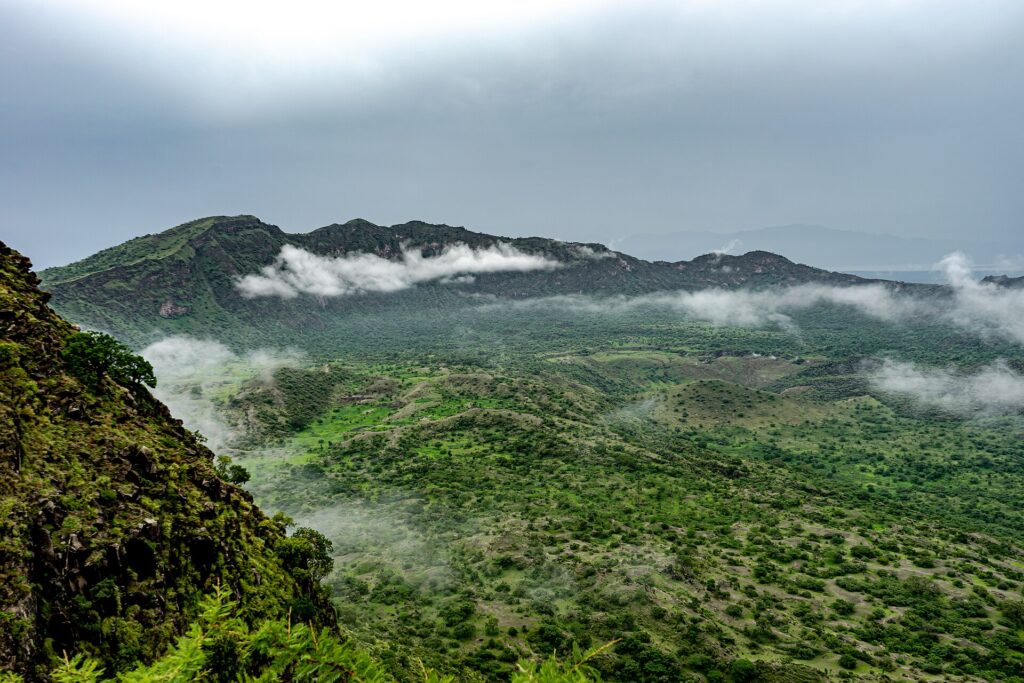
- Mount Fentale. A dormant volcano, about 2,000 metres high, rising above the northern plains, with a large crater and old lava fields along the road.
- The plains. The grasslands of Illala Sala are the best place for game drives.
- Filwoha hot springs. In the north of the park, clear blue pools of warm spring water lie in a grove of doum palms. Do not swim: the water is very hot in places and crocodiles live in the river nearby.
Wildlife
The park is known for animals of the dry lowlands rather than big cats:
- Beisa oryx, the elegant straight-horned antelope that is the park’s symbol.
- Soemmerring’s gazelle, lesser and greater kudu, Salt’s dik-dik and warthogs.
- Baboons: Awash is famous among scientists for its mixed troops of hamadryas and anubis baboons.
- Birds: more than 450 species have been recorded, including ostriches, bustards, hornbills and many raptors.
Lions, cheetahs and leopards are present but rarely seen.
People of the park
The park lies on the border of the Oromia and Afar regions, and Karrayyu Oromo and Afar pastoralists graze their camels, cattle and goats here. You will see them along the main road and in the park. Ask before taking photographs.
How to visit
- With a tour or a hired car: most visitors come with a driver from Addis Ababa. A 4×4 is best on the park tracks.
- Scouts: an armed park scout accompanies vehicles on game drives; arrange one at the gate or headquarters.
- By train: the Addis Ababa–Djibouti railway stops at the town of Awash, close to the park, but you will still need a vehicle inside.
When to go
Awash is hot all year, with daytime temperatures often above 30°C. The cooler, drier months from about October to February are the most comfortable, and animals gather near water in the dry season. Start game drives early in the morning or late in the afternoon. See when to visit.
Tips
- Carry plenty of water, a hat and sunscreen; see health and medical care.
- Use insect repellent in the evenings and ask a travel clinic about malaria for the lowlands.
- Combine Awash with a night at the hot springs of Sodere, or continue east towards Dire Dawa and Harar.
For Ethiopia’s other parks, see Ethiopia national parks and Ethiopian wildlife.