Updated October 2026.
Genna (ገና) is Ethiopian Christmas, celebrated on 7 January, which is Tahsas 29 in the Ethiopian calendar. In 2027 it falls on a Thursday. It is a quieter, more spiritual festival than Christmas in many countries: the heart of it is an all-night church service, followed by the first meat and butter after six weeks of fasting, shared with family. This guide explains what happens, where to see it and how to join in respectfully.
Why 7 January?
The Ethiopian Orthodox Tewahedo Church keeps its own calendar, close to the old Julian calendar, so its Christmas falls thirteen days after 25 December. The Ethiopian year is different too: January 2027 is in the year 2019 in Ethiopia. The Ethiopian calendar explains how the 13 months work.
The fast before Genna
Genna is preceded by Tsome Nebiyat, the Fast of the Prophets, which lasts about 43 days, from late November until 6 January. Observant Christians eat no meat, eggs or dairy during this time, so restaurant menus fill with vegan dishes. See Ethiopian fasting food for what that means at the table. The fast ends after the Christmas service.
What happens on Christmas Eve and Christmas Day
- The night service. On the evening of 6 January, families dress in white: women in a netela, the light cotton shawl, and men in a gabi. They walk to church for a service of chants, prayers and readings that lasts through the night and ends before dawn. Many people stand outside the church, holding candles.
- Breaking the fast. Back home, the first meal is a feast. Doro wat, chicken stewed in berbere and spiced butter with eggs, is the centrepiece, served with injera, tibs, tej (honey wine) or tella. See Ethiopian dishes to try first.
- Visiting. The day is spent with family and neighbours, eating, drinking coffee and sharing dabo, a large round festive bread. Bringing bread or pastries when you visit is the custom; see gifts in Ethiopia.
- The game of genna. In the countryside, boys and young men still play genna, a fast field game with curved sticks and a wooden ball, which is said to have given the holiday its name.
Presents and decorations play a much smaller part than in Western Christmas, although Christmas trees and lights have become popular in Addis Ababa hotels and shopping centres.
Where to see Genna
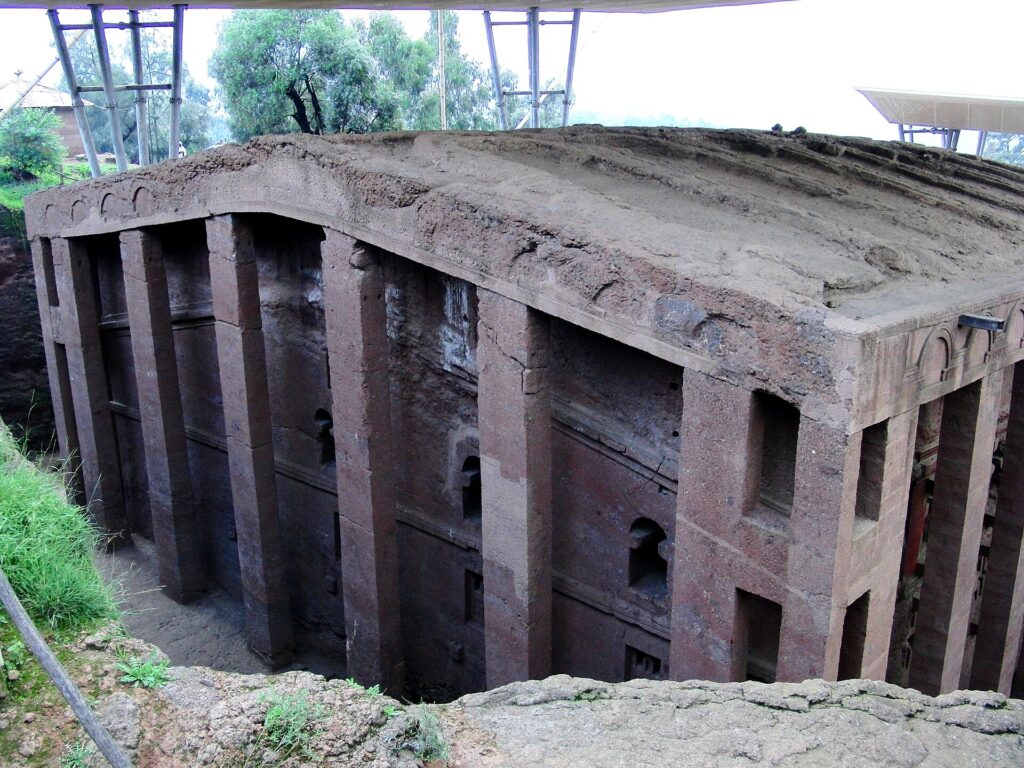
- Lalibela. The most famous Genna celebration takes place among the 12th-century rock-hewn churches of Lalibela, where thousands of pilgrims arrive from across the country, many on foot, and priests chant from the rim of Bete Maryam. It is a remarkable sight, but accommodation fills months ahead. Lalibela is in the Amhara region: read your government’s current travel advice before planning a trip there.
- Addis Ababa. Every church in the capital holds the night service, and visitors can watch from the churchyard. Holy Trinity Cathedral, Bole Medhane Alem and St George’s in Piazza draw large crowds. Ask your hotel which church is nearest.
How to join in respectfully
- Dress modestly and, if you can, in white. Women cover their hair with a scarf in church.
- Take off your shoes if you enter the church building; most worshippers stay outside.
- Ask before photographing people at prayer, and never use flash during the service.
- Be ready for long hours on your feet. Bring a warm layer: highland nights in January are cold.
- Greet people with melkam genna, “happy Christmas”, or melkam beal, “happy holiday”. More words in Amharic phrases for travellers.
Planning a January trip
January is in the dry season and one of the best months to visit Ethiopia; see when to visit. Genna is followed twelve days later by Timkat, the Epiphany festival on 19 January, and many travellers plan a trip around both. Book flights and hotels early: these are the busiest weeks of the year for domestic travel.
Quick facts
| Date | 7 January (Tahsas 29) |
| 2027 | Thursday 7 January |
| Fast before | Tsome Nebiyat, about 43 days |
| Greeting | Melkam Genna |
| Best-known celebration | Lalibela |