Updated October 2026.
Timkat (ጥምቀት), Ethiopian Epiphany, is the most colourful festival of the Ethiopian year. On 19 January (Tir 11 in the Ethiopian calendar; 20 January in a leap year) the Orthodox Church celebrates the baptism of Christ in the River Jordan with processions, all-night vigils by the water and a joyful morning of blessing and splashing. In 2027 the eve falls on Monday 18 January and Timkat itself on Tuesday 19 January. UNESCO added Timkat to its list of Intangible Cultural Heritage in 2019.
The three days of Timkat
Ketera, the eve (18 January). In the afternoon each church brings out its tabot, a consecrated replica of the Tablet of the Law, wrapped in rich cloth and carried on the head of a priest. Under colourful umbrellas, with drums, chanting and thousands of people in white, the tabots are carried in procession to a river, a lake or a pool. Tents are set up and priests and worshippers keep vigil through the night.
Timkat morning (19 January). Before dawn, a mass is held by the water. The water is blessed and then sprinkled over the crowd, and in some places people jump in to renew their baptismal vows. Later the tabots begin their slow procession home, accompanied by singing, dancing and young men in their best clothes.
Kana ze Galila (20 January). The next day marks the wedding at Cana. The tabot of St Michael and some others return to their churches in another round of processions, and the festival winds down.
Where to see Timkat
- Addis Ababa. The largest gathering is at Jan Meda, the open ground in the north-east of the city, where tabots from many churches spend the night. Processions pass through streets all over the city on both days, so you can see Timkat without travelling at all.
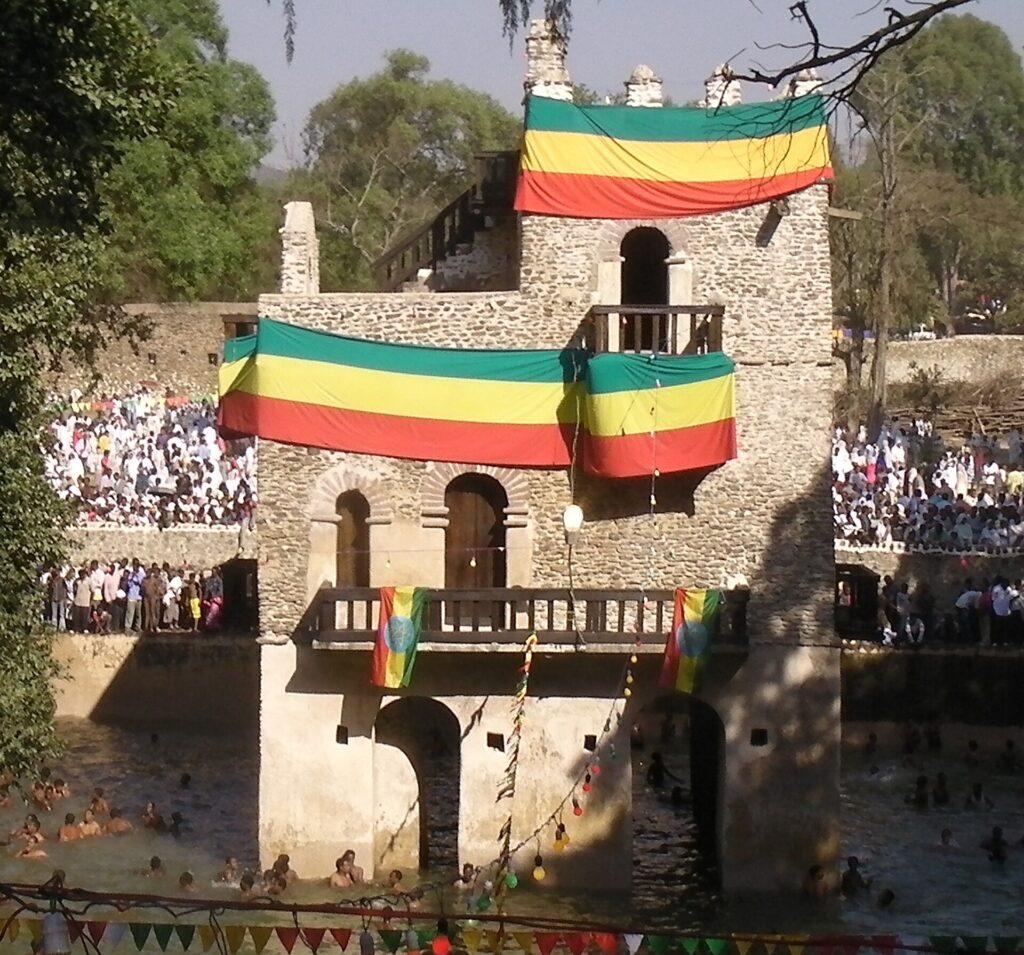
- Gondar. The pool of Fasilides’ Bath, a 17th-century royal retreat, is filled for the occasion; after the blessing, crowds leap into the water. It is the most photographed Timkat in the country.
- Lalibela. Processions wind between the rock-hewn churches, with priests in brocade and the sound of drums and sistra.
Gondar and Lalibela are both in the Amhara region. Read your government’s current travel advice before planning a trip there; Addis Ababa’s celebration is spectacular in its own right.
How to take part
- Wear white if you can, or at least something modest. A light scarf (netela) works for everyone.
- Follow the crowd, not the cameras. The tabot is the holiest object in the procession. Do not step in front of it, touch it or try to photograph it close up; stewards will stop you.
- Ask before photographing people, especially priests and women at prayer.
- Expect to get wet on the morning of the 19th if you stand near the water.
- Keep valuables close in the crowds, and agree a meeting point with your group.
- Greet people with melkam beal, “happy holiday”. See Amharic phrases for travellers.
Planning your trip
Timkat falls in the dry season and is one of the busiest weeks of the year for flights and hotels, especially in Gondar and Lalibela, so book early. Twelve days earlier is Genna, Ethiopian Christmas on 7 January, and many travellers combine the two. When to visit covers the season, and the festivals section has the full calendar, from Meskel in September to Irreecha in October.
Quick facts
| Date | 19 January (Tir 11); 20 January in a leap year |
| 2027 | Eve Monday 18 January, Timkat Tuesday 19 January |
| What it marks | The baptism of Christ |
| Best places | Jan Meda (Addis Ababa), Fasilides’ Bath (Gondar), Lalibela |
| UNESCO | Intangible Cultural Heritage, 2019 |