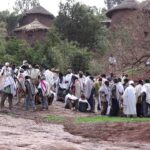
Early on Sunday mornings, people dressed in white walk towards churches across Ethiopia. Many remain outside. They stand in the churchyard, lean against the wall, bow, kiss the gate and pray while chanting in an ancient language carries over loudspeakers.
What is the Ethiopian Orthodox Tewahedo Church?
The Ethiopian Orthodox Tewahedo Church is one of the world’s oldest churches and Ethiopia’s largest religious community. Tewahedo (ተዋሕዶ) is a Ge’ez word meaning “made one” or “united”. It refers to the church’s teaching that Christ’s divine and human natures are united in one nature.
That belief places it in the Oriental Orthodox family, with the Coptic, Syriac, Armenian and Eritrean churches and the Malankara church of India. These churches parted from Rome and Constantinople after the Council of Chalcedon in 451. They are not the same as the Eastern Orthodox churches of Greece and Russia, though they share many traditions.
For about 1,600 years the Ethiopian church’s head bishop was an Egyptian monk sent by the Coptic Patriarch of Alexandria. The church became independent in 1959, when it enthroned its first Ethiopian patriarch.
The Ethiopian church has its own Bible, with more books than most others. It includes the Book of Enoch and the Book of Jubilees, which survive complete only in Ge’ez.
How Christianity came to Ethiopia
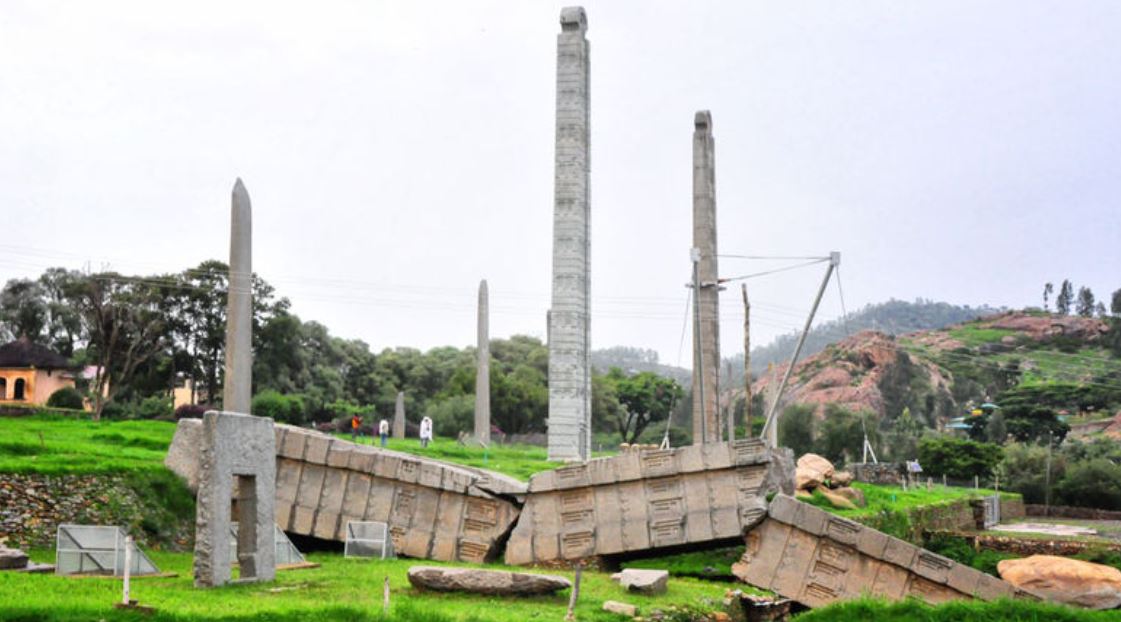
In the 4th century, Aksum was one of the great trading powers of the ancient world, linking the Roman Empire, Arabia and India through its Red Sea port of Adulis. Christian merchants passed through, and the new faith came with them.
The church’s own story begins with Frumentius, a young Christian from Tyre in what is now Lebanon. According to the 4th-century historian Rufinus, he and his brother were shipwrecked on the Red Sea coast as boys and taken to the Aksumite court, where Frumentius rose to become a royal tutor. He later travelled to Alexandria, was made a bishop by Saint Athanasius and returned to Aksum. Ethiopians call him Abba Salama, “father of peace”, and Kesate Birhan, “revealer of light”.
His pupil, King Ezana, became a Christian around the 330s or 340s. The change shows clearly on Ezana’s coins: the pagan sun-and-moon symbols give way to the cross, making them among the earliest coins anywhere to carry it. Ezana’s inscriptions in Aksum begin to speak of one God. In the late 5th century the “Nine Saints”, monks from the eastern Roman world, spread monasteries and translated scripture into Ge’ez.
What does an Ethiopian church look like?
The round church
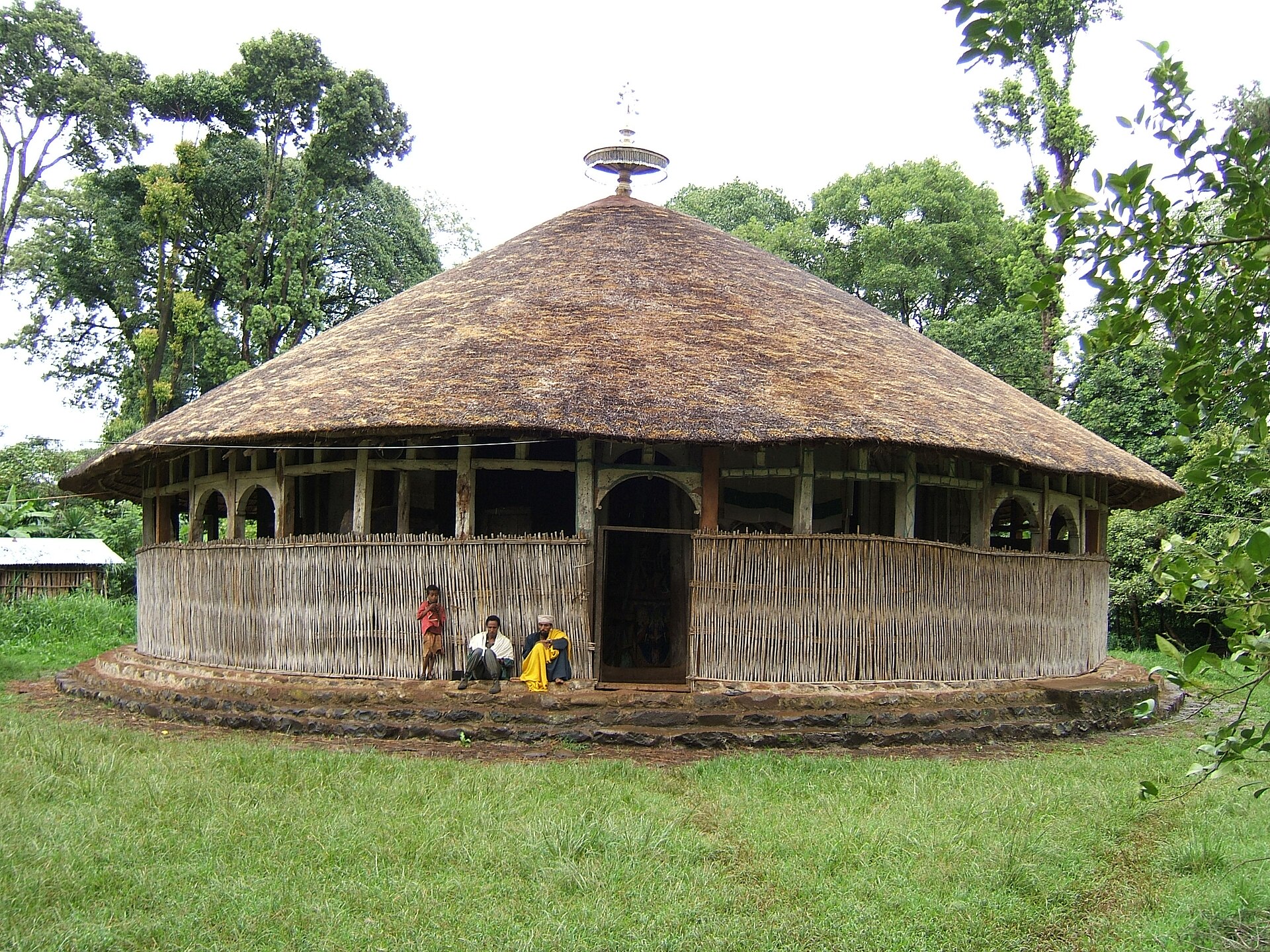
The most common shape in the highlands is round, or sometimes eight-sided, with a cone-shaped roof topped by an ornate cross. Many churches stand inside a walled compound with a gatehouse, often shaded by old trees. In parts of the highlands these church forests are the last patches of native forest left, protected for centuries because they belong to the church.
Rectangular and basilica churches
Not all churches are round. The oldest surviving churches, such as the monastery of Debre Damo and Yemrehanna Kristos, are rectangular, built in the Aksumite style with layers of stone and wooden beams. Many large modern churches and cathedrals in towns are rectangular too.
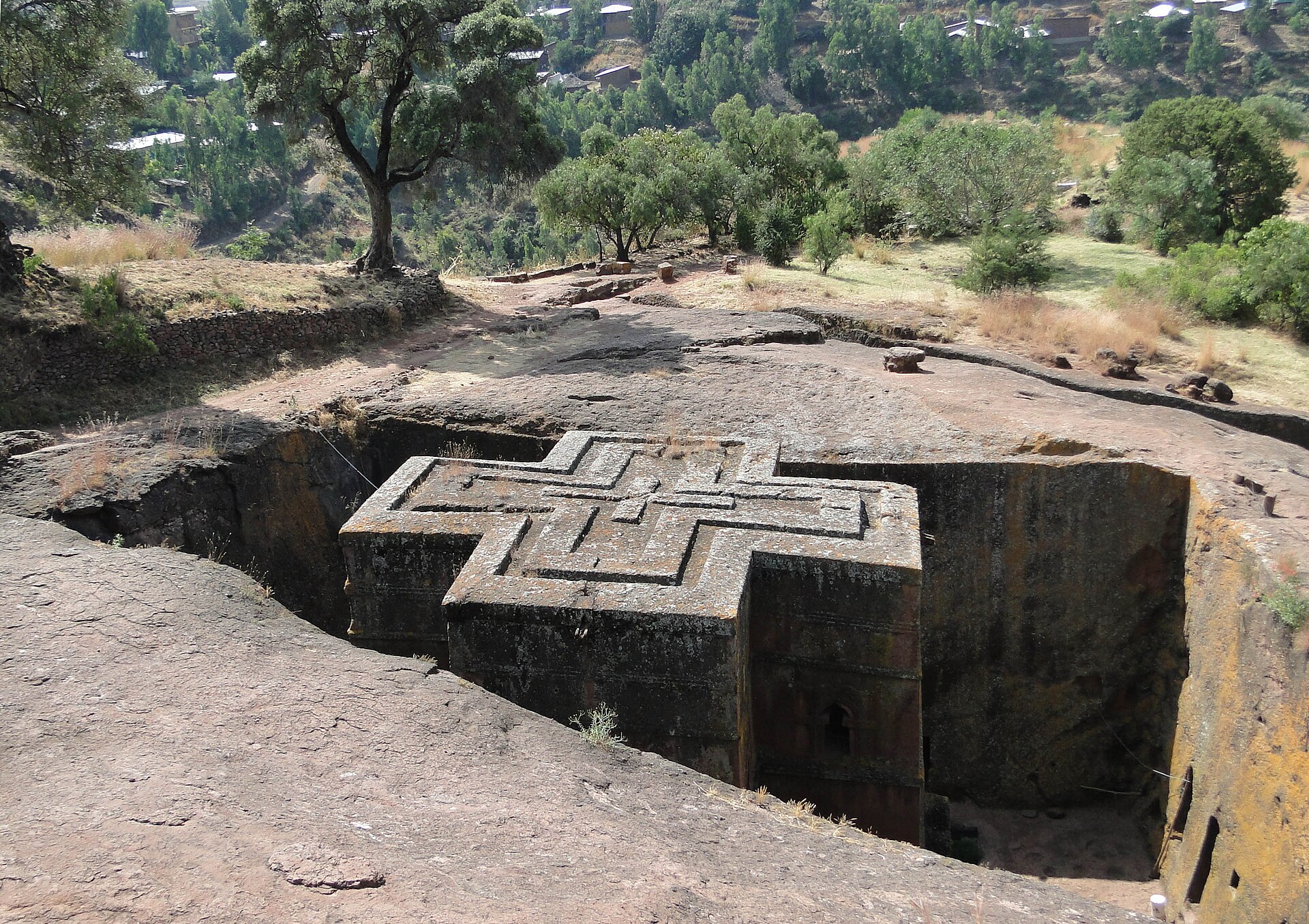
Rock-hewn churches
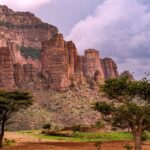
Some of Ethiopia’s best-known churches were carved down into solid rock. The eleven churches of Lalibela, made in the late 12th and early 13th centuries, have been a UNESCO World Heritage Site since 1978. Bete Giyorgis, shaped like a cross and sunk about 12 metres into the ground, is the most widely recognised. Tigray has more than a hundred rock-hewn churches, many cut into cliffs. Priests still hold services in them. See Ethiopia’s heritage sites and the rock churches of Tigray.
The three sacred rings
Inside a traditional round church, three concentric rings lead towards the sanctuary. Each is considered holier than the one before it. The layout recalls the Temple of Jerusalem described in the Old Testament.
| Ring | Name | Who uses it |
|---|---|---|
| Outer | Qene Mahlet (ቅኔ ማሕሌት) | The choir of debtera (trained chanters) and the congregation |
| Middle | Qeddest (ቅድስት) | Priests, deacons and those taking communion |
| Centre | Maqdas (መቅደስ) | The sanctuary, holding the altar and the tabot. Only priests and deacons may enter |
Qene Mahlet: the outer ring
The outer ring is the place of song. Here the debtera chant the hymns of the day, sometimes through the night before a feast, and the people stand to pray. Qene is a form of poetic hymn, and mahlet means song.
Qeddest: the middle ring
The middle ring is where communion is given, and where priests and deacons move during the liturgy. In many churches it is screened from the outer ring by curtains or a low wall.
Maqdas: the holy of holies
At the centre is a square sanctuary, often richly painted on the outside, with curtained doors. Inside are the altar and the tabot. Lay people, men and women, never go in, and visitors should never try to.
What is the tabot?
A tablet, not a box
Every Ethiopian Orthodox church has at least one tabot (ታቦት), a flat tablet of wood or stone consecrated by a bishop. It is engraved with a cross and the name of the saint or holy figure to whom the church is dedicated. The tabot represents the tablets of the Ten Commandments kept in the Ark of the Covenant. A building becomes a church when it holds a tabot, which is the consecrated object.
Where it is kept
The tabot rests on the altar inside the maqdas, wrapped in rich cloth. Only priests may touch it, and lay people never see it uncovered.
The tabot at Timkat
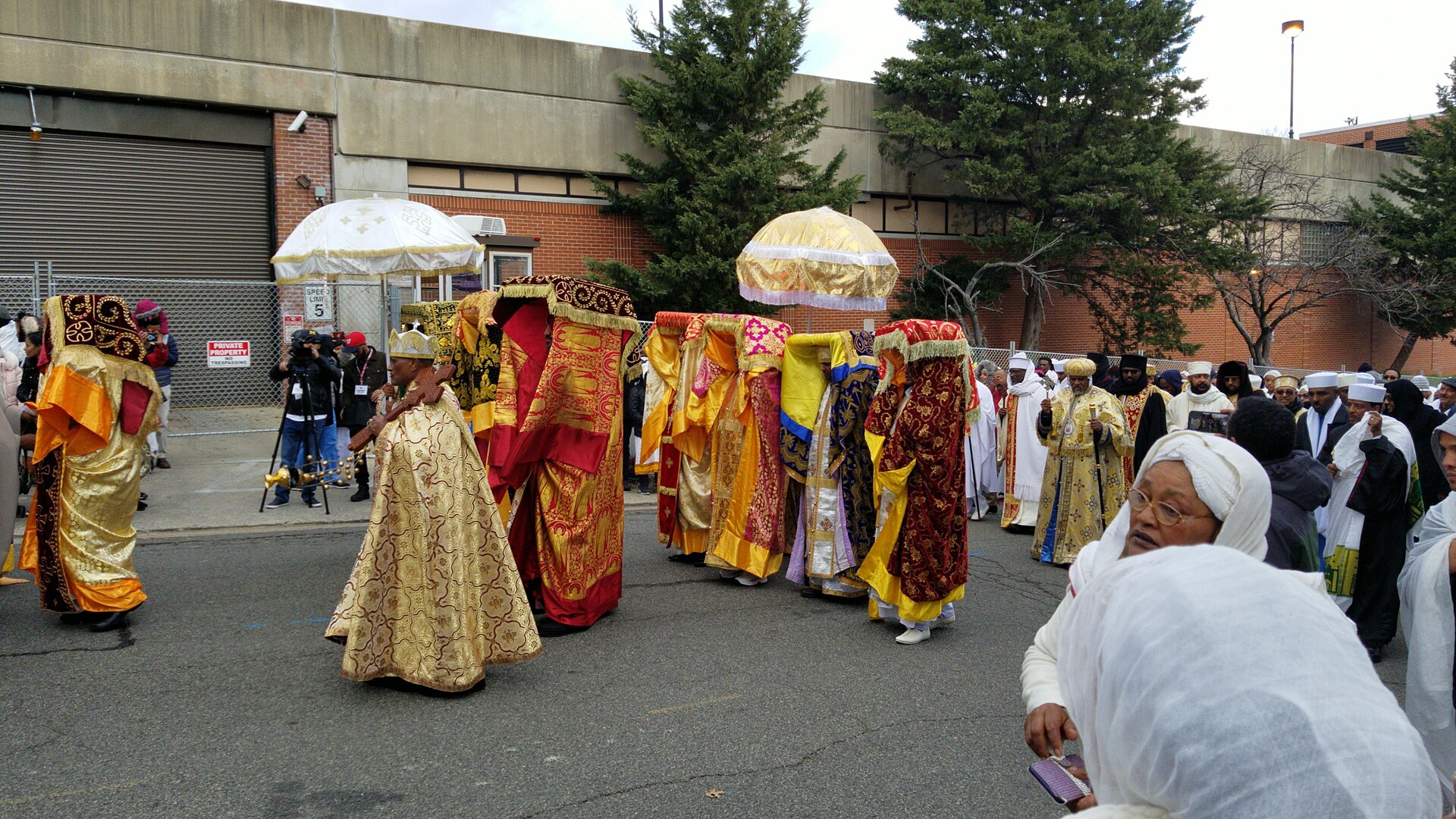
Once a year, at Timkat (Epiphany, on 19 January, or 20 January in some years), the tabots leave their churches. Priests carry them on their heads, wrapped in brocade and shaded by colourful umbrellas, to a river, lake or pool, where they spend the night. The next morning the water is blessed and the tabots return in procession, with singing, dancing and drumming. Timkat was added to UNESCO’s list of Intangible Cultural Heritage in 2019.
And the Ark of the Covenant?
Ethiopian tradition holds that the original Ark of the Covenant is kept in Aksum. According to the Kebra Nagast, a 14th-century book of legends, it was brought from Jerusalem by Menelik I, son of King Solomon and the Queen of Sheba. The Ark is said to rest in a chapel beside the Church of Our Lady Mary of Zion, guarded by a single monk who never leaves the grounds and is the only person allowed to see it. No one outside the church has ever been allowed to examine it, so this is a matter of faith rather than something historians can test. Every tabot in Ethiopia is understood as a representation of that Ark.
Why do worshippers wear white?
The netela and gabi
Most worshippers wear a netela (ነጠላ), a light shawl of handwoven white cotton, often with a coloured woven border. Women wrap it over the head and shoulders; men drape it over the shoulders. For cold mornings and all-night vigils people wear the gabi, a much thicker cotton blanket-shawl.
Why white?
White represents purity, joy and reverence and is worn on feast days. Most churchgoers dress in white for services and festivals, though this is a custom rather than a strict rule. At funerals and during mourning, people wear the netela differently, sometimes with the border turned inside. Darker clothes are worn in some areas.
Why take off your shoes?
Worshippers take off their shoes before stepping inside the church, following God’s command to Moses at the burning bush: “Take off your sandals, for the place where you are standing is holy ground.” Shoes are left at the door, sometimes in the care of a shoe-keeper. In some monasteries and rock churches you also take off your shoes in the courtyard. Follow what the locals do.
Why do men and women stand apart?
In most churches men and women use different doors and stand on different sides of the outer ring, and the separation continues at outdoor services and festivals. Ethiopians explain it as a matter of order, modesty and concentration on prayer, inherited from the early church. It does not imply that one is spiritually higher than the other. Arrangements vary between churches, and a few monasteries do not admit women at all.
What happens during a service?
The liturgy: Kidase
The main service is the Kidase (ቅዳሴ), the Eucharist. On Sundays it often begins before dawn and lasts two to three hours, and on great feasts the services can run through the night. The church has more than a dozen different eucharistic prayers, used on different days. The liturgy is chanted in Ge’ez, with readings and the sermon in Amharic or the local language.
People stand for most of the service. Older worshippers lean on a mequamia, a tall T-shaped prayer staff.
Chant, incense and bowing
The service is chanted. On feast days, the kebero drum and the tsenatsil, a metal sistrum or rattle, accompany the singing. Priests swing censers of incense. At certain points, worshippers bow deeply or prostrate themselves, touching their foreheads to the ground. There is more on church music in Ethiopian music and dance.
Communion
Those who take communion fast from the night before and prepare in other ways. Most people who receive it are small children, older people or particularly devout worshippers. Many others attend without taking communion. Visitors should not go forward to receive it.
Religious art and objects
Crosses
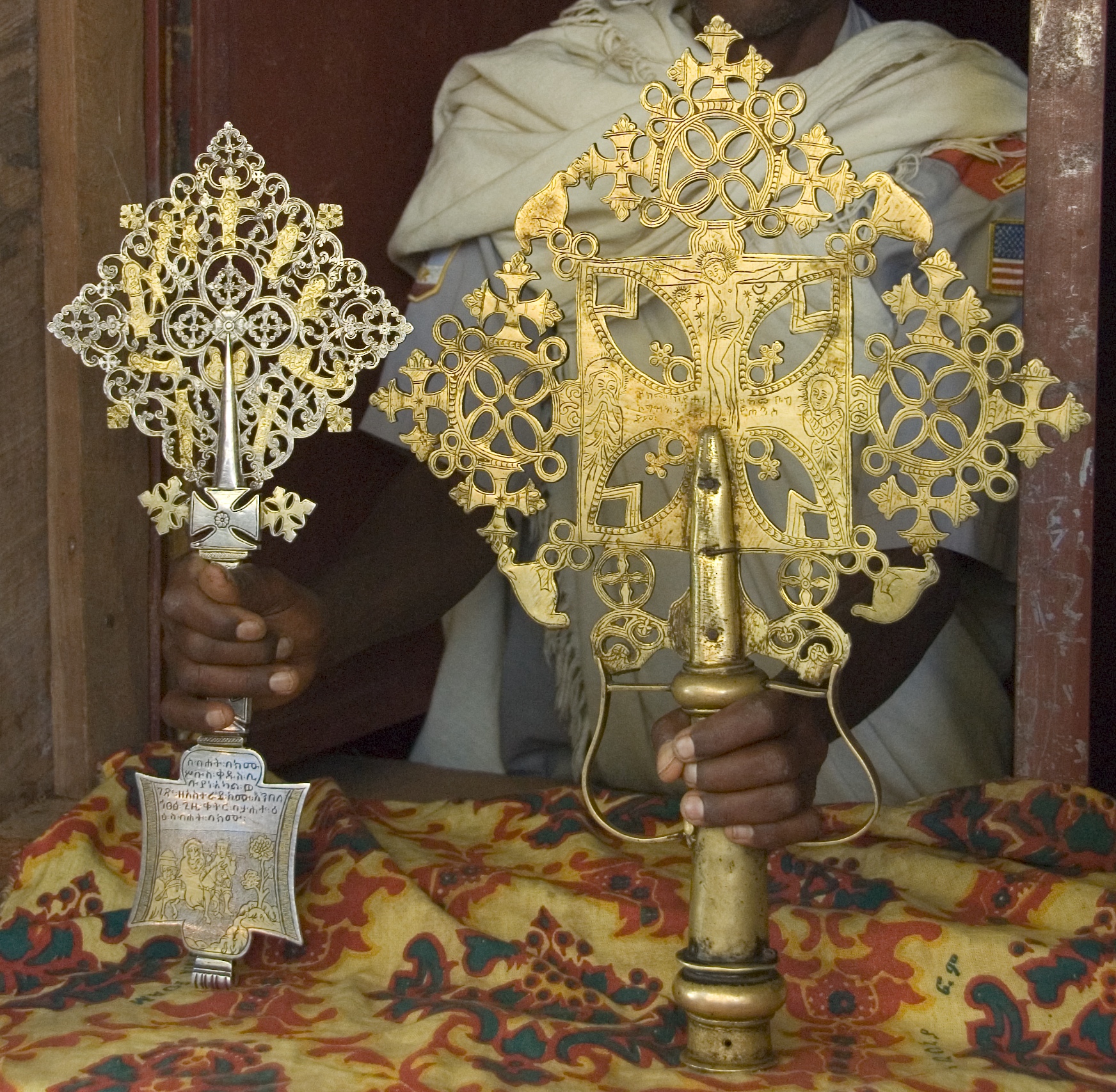
The Ethiopian cross is an art form. There are large processional crosses carried on poles, hand crosses that priests hold out for people to kiss, and small neck crosses worn by millions of Ethiopians. Designs vary from region to region, and the lace-like patterns of Lalibela, Aksum and Gondar crosses are each recognisable.
Paintings
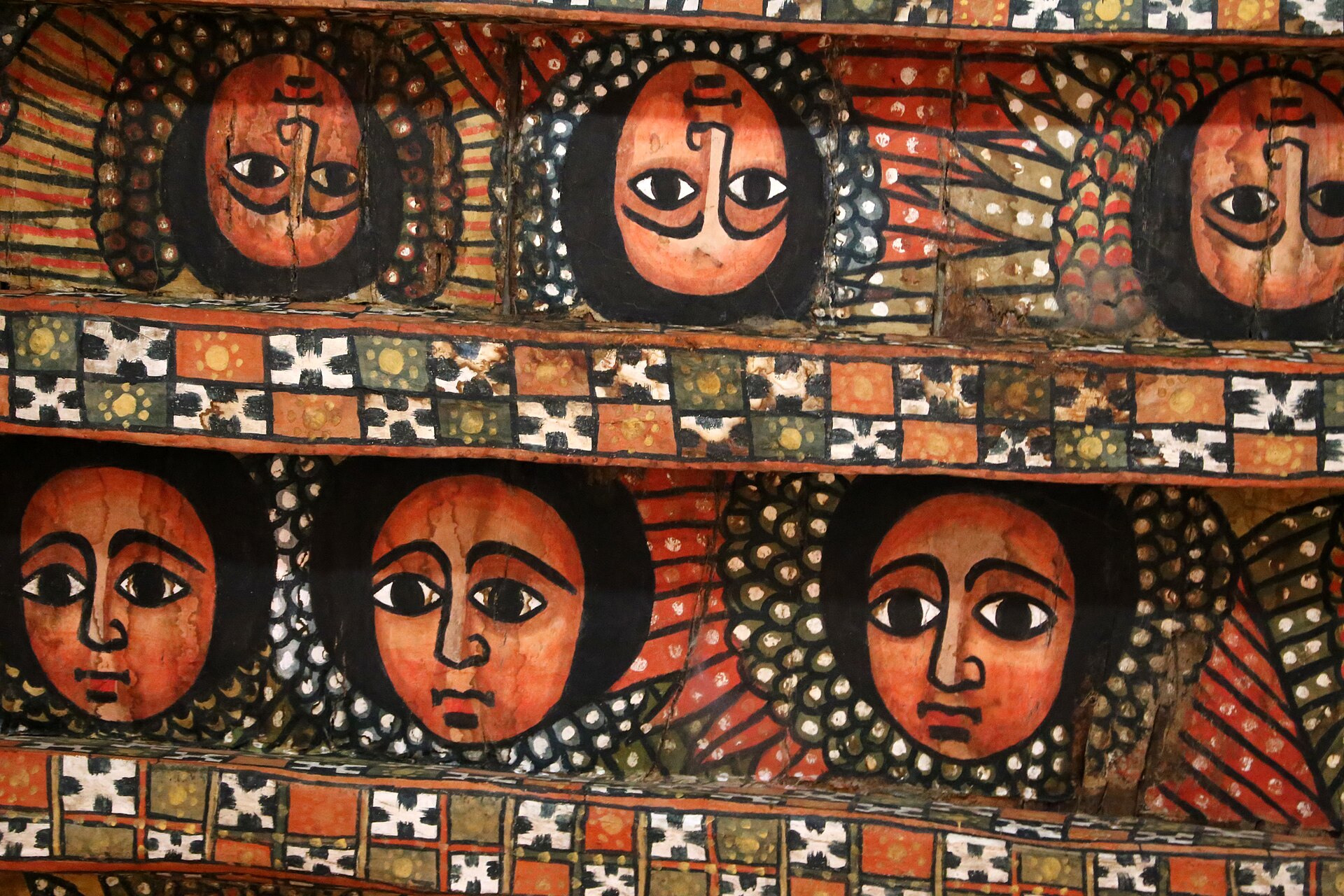
Walls, ceilings and the outside of the maqdas are covered with bright paintings, often on canvas glued to the walls: the Virgin Mary and Child, Saint George on his white horse slaying the dragon, angels, martyrs and scenes from the life of Christ. One old convention is easy to spot: holy figures are painted facing you with both eyes visible, while villains and devils are shown in profile with one eye.
Manuscripts
Many churches keep hand-written books in Ge’ez on parchment, some centuries old and illustrated with paintings. The script is explained in our guide to the Ethiopian alphabet. In monasteries, priests will often show visitors their old books and crosses.
Fasting and the church calendar
The church year is shaped by fasting. Lay people fast on Wednesdays and Fridays, except during the 50 days after Easter, and observe several longer fasts. These include the 55 days of Lent before Easter, the 43 days before Genna (Christmas) and 16 days in August before the feast of the Assumption. Devout lay people fast around 180 days a year; priests and monks do so for well over 200.
Fasting means no meat, eggs or dairy, and on many fast days no food at all until midday or the afternoon. That is why Ethiopian restaurants have so many vegan dishes. See Ethiopian fasting food.
Each day of the month is also dedicated to a saint or angel. The 12th belongs to Saint Michael, the 19th to Saint Gabriel, the 21st to the Virgin Mary and the 23rd to Saint George, and churches dedicated to them celebrate on those dates every month. The dates follow the Ethiopian calendar, which you can convert with our Ethiopian calendar converter.
Major festivals
- Genna, Christmas, on 7 January. All-night services, especially in Lalibela, followed by a feast that ends the Advent fast.
- Timkat, Epiphany, on 19 January (20 January in some years). The tabot processions to the water.
- Fasika, Easter, after 55 days of Lent. A night-long service ends around 3 a.m. with the breaking of the fast.
- Meskel, the Finding of the True Cross, on 27 September (28 September in some years), with the great Demera bonfire the evening before. Meskel was added to UNESCO’s Intangible Cultural Heritage list in 2013.
Famous churches to know
- The rock churches of Lalibela. Eleven churches carved from the rock, still used for worship and the great Genna pilgrimage.
- The rock churches of Tigray. More than a hundred, some reached only by steep climbs. Debre Damo monastery, on a flat-topped mountain, is reached by climbing a leather rope and admits men only. See Tigray rock churches.
- Debre Berhan Selassie, Gondar. Built under Emperor Iyasu I in the late 17th century, famous for its ceiling covered in rows of winged angel faces. Legend says a swarm of bees saved it from attack in 1888.
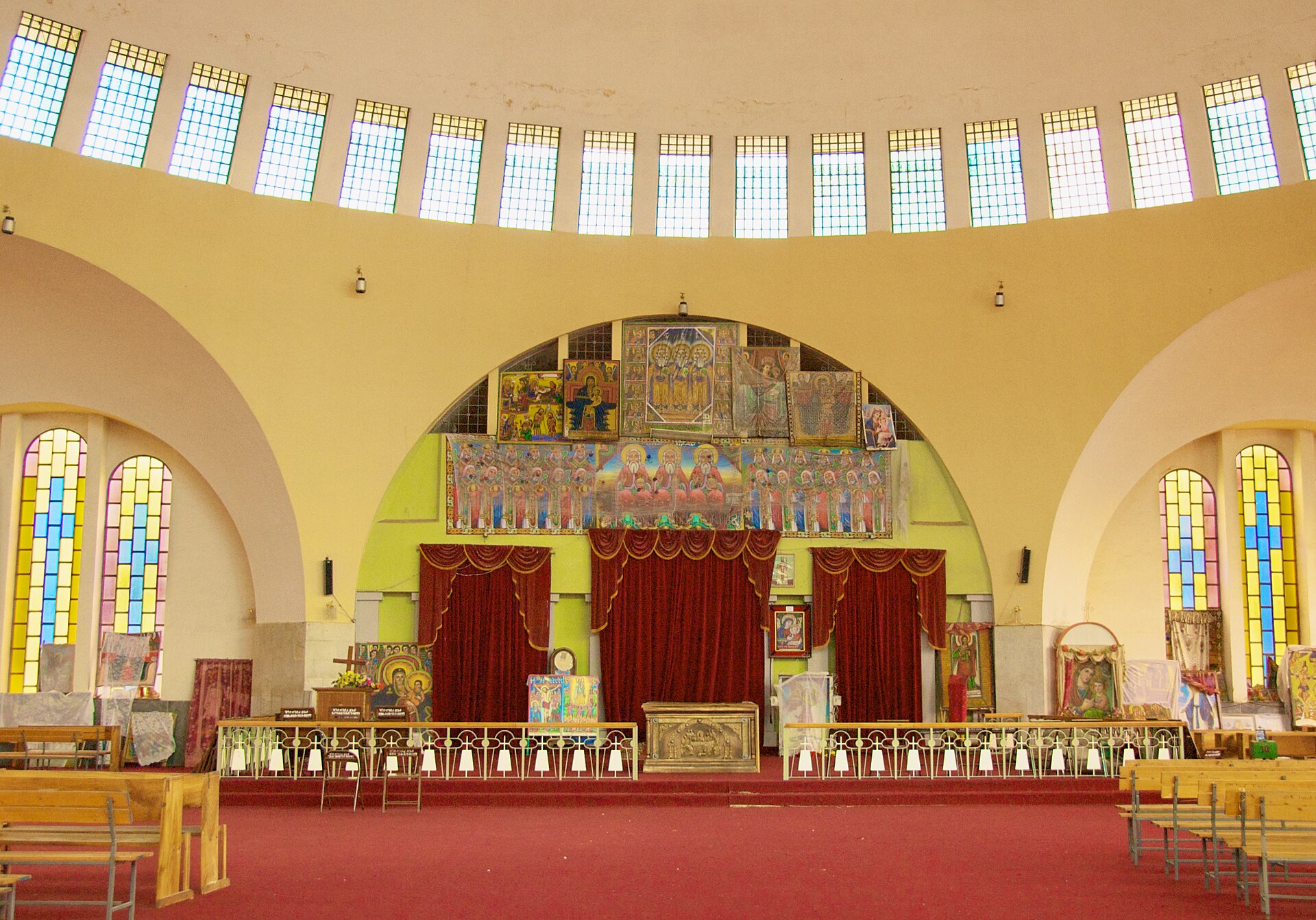
- Our Lady Mary of Zion, Aksum. The old church, rebuilt by Emperor Fasilides in the 17th century and open to men only; the large new cathedral, built in the 1960s, open to all; and the chapel said to hold the Ark.
- The monasteries of Lake Tana. Island and lakeside monasteries with painted churches and old manuscripts. Some admit men only, while those on the Zege Peninsula, such as Ura Kidane Mehret, are open to everyone. See Bahir Dar and Lake Tana.
- Debre Libanos, north of Addis Ababa, one of the country’s most important monasteries, founded in the 13th century.
Several of these are in the Amhara and Tigray regions. Read your government’s current travel advice before planning a trip.
Visiting an Ethiopian Orthodox church
What to wear
Cover your shoulders and knees. Women should bring a scarf or netela to cover their hair. Wear shoes that are easy to remove and socks for cold stone floors.
How to behave
- Take off your shoes where others do.
- Speak quietly and turn off your phone’s sound.
- Don’t walk in front of people praying or cross the church during the service.
- Never enter the maqdas or touch the curtains around it.
- Ask before taking photographs, and never use flash on old paintings or manuscripts. Many tourist churches charge an entry fee, and some a separate camera fee.
- Follow instructions from priests and church guards.
Can non-Christians visit?
Yes. Most churches and churchyards, especially well-known sites, welcome visitors of any faith who dress and behave respectfully. Visitors may observe but should not take part in communion. Some monasteries have their own rules, including ones that admit men only.
Frequently asked questions
How old is the Ethiopian Orthodox Church?
Christianity became the faith of the Aksumite king in the 4th century, about 1,700 years ago, which makes the Ethiopian church one of the oldest national churches in the world.
What does Tewahedo mean?
“Made one” or “united”, in Ge’ez. It refers to the belief that Christ’s divine and human natures are united.
Why are Ethiopian churches round?
The round plan suits the three rings around the sanctuary and echoes traditional highland houses. Older churches, and many modern ones, are rectangular.
What is the tabot?
A consecrated tablet of wood or stone representing the tablets of the law kept in the Ark of the Covenant. Every church has one, and it is never shown uncovered.
Why do people pray outside the church?
Many worshippers pray in the churchyard or at the gate, especially when the church is full, when they have not fasted, or out of humility. Loudspeakers let them follow the service.
What language is used in services?
The liturgy is chanted in Ge’ez, the classical language of Ethiopia. Readings and sermons are in Amharic or the local language.
Can tourists go inside?
Yes, into the outer part of most churches, with shoes off and modest dress. The sanctuary is closed to everyone except clergy.