Updated September 2026 by Dawit Deggu Mohis, Addis Ababa.
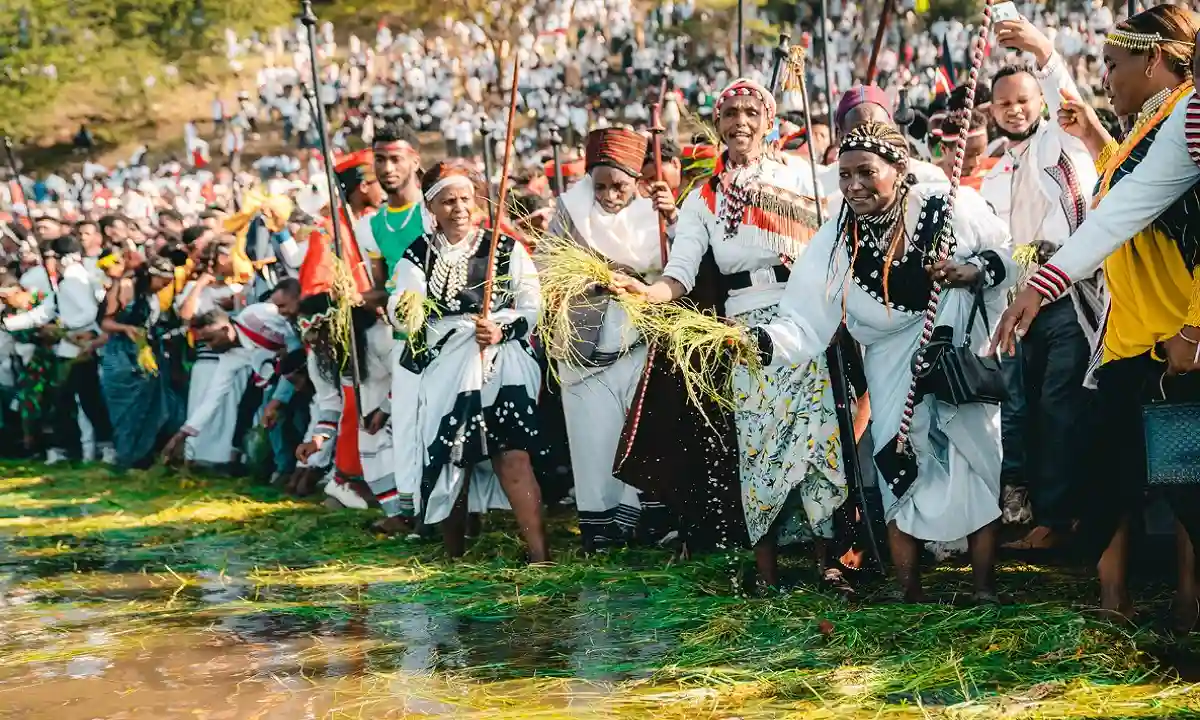
In Ethiopia the greeting is not a formality you get through before the real conversation. It is the conversation — or at least the part that decides how the rest of it goes. Foreign visitors who walk up and ask a question straight away are not thought rude on purpose, but they are noticed. Five minutes of learning this will change how people respond to you for your whole trip.
The basic greeting
Between two men, or two people of similar age who know each other, the standard greeting is a handshake with a shoulder touch: you shake hands and lean in so your right shoulders meet, once or three times, while holding the handshake. It is warm and unhurried.
With someone you have just met, a plain handshake is fine. Ethiopian handshakes are usually lighter than Western ones — a firm, brisk grip can read as aggressive rather than confident.
Eye contact during the greeting is direct and friendly. Looking away while shaking hands reads as evasive.
Women greeting women who know each other well kiss on alternating cheeks three times or more — and genuinely more; five or seven between close friends and family is normal.
Between a man and a woman, follow her lead. A handshake is standard; cheek kisses happen between people who know each other. Some conservative Muslim women will not shake hands with a man — a hand placed on your own heart with a nod is the correct, respectful response, and nothing awkward has happened.
Greeting elders — the part that matters most
Age carries real weight in Ethiopian society, and greeting an older person correctly is the clearest signal you can give that you understand where you are.
- Greet the eldest person first, always, before anyone else in the room.
- Bow slightly as you shake hands — a bend from the waist, not a nod.
- A deeper version, used with the very elderly or with clergy, is to bow while supporting your right forearm with your left hand as you offer it.
- Younger people may kiss the hand or knee of a grandparent or a priest. You are not expected to, but you will see it.
- Stand up when an older person enters the room.
With Orthodox priests the greeting is different again: the priest offers a hand cross, which you kiss, and he may touch your forehead with it.
What to say
Amharic is the language you will use most, but a greeting in the local language anywhere else in the country is worth ten of anything else.
| Amharic | Afaan Oromo | Tigrinya | |
|---|---|---|---|
| Hello / peace | Selam / Tena yistilign | Akkam / Nagaa | Selam |
| Good morning | Endemin aderk (m) / aderish (f) | Akkam bulte | Kemey hadirka |
| How are you? | Endemin neh (m) / nesh (f) | Akkam jirta? | Kemey alekha? |
| I’m fine, thank God | Dehna negn, egziabher yimesgen | Nagaa dha | Tsibuk |
| Thank you | Ameseginalehu | Galatoomaa | Yekenyeley |
| Goodbye | Dehna hun | Nagaatti | Dehan kun |
Tena yistilign is the fuller, more formal “hello” — literally “may God give you health”. Using it with an older person is a small courtesy that lands well.
Note that Amharic verbs change for men and women: endemin neh to a man, endemin nesh to a woman. Getting it wrong is charming rather than offensive, but getting it right is better. More on the Amharic phrases page.
The long greeting
Here is the thing that most surprises visitors. A proper Ethiopian greeting between people who know each other is not one question. It is a sequence:
How are you? — I’m fine, thank God. How are you? — Fine. How is your family? — They’re well. How is your health? — Good, thank God. How is work? — Fine…
It can run for a minute or more, with both people talking at once and neither really waiting for answers. It is not small talk to be endured; it is the actual point — an unhurried demonstration that you have time for this person.
Do not shorten it, and do not interrupt it to get to your question. If you are in a shop, an office or a taxi, greet first, let the exchange run, and only then say what you came for. Business in Ethiopia works the same way: meetings open with coffee and personal enquiries, and cutting to the agenda is read as cold. That side of things is on Ethiopian time and punctuality.
Everyday courtesies visitors get wrong
Use the right hand. Give and receive with the right hand, or with both hands for extra respect. The left hand alone is reserved for ablutions. This applies to money, gifts, business cards and food.
Both hands, or right hand supported at the elbow, when handing something to an elder — a small gesture that is noticed every time.
Beckoning is done with the palm facing down and fingers waving. The Western palm-up “come here” finger is rude.
Pointing with a single finger at a person is impolite; use an open hand.
Do not skip the greeting on the phone. The same sequence happens before the reason for the call.
Removing shoes is expected in homes, in mosques, and in Orthodox churches — always in churches, without exception.
Farenji. You will be called farenji (foreigner) in the street, often by children, often cheerfully. It is not an insult. Ethiopians call themselves habesha. Smile and greet back; it usually ends the matter warmly.
Greeting in different settings
Entering a shop or an office: greet the room — selam — before saying anything else.
Getting into a taxi: greet the driver before naming your destination.
Joining a group: shake hands with everyone individually, starting with the eldest, going round the room. Do not greet the group collectively and sit down.
Passing someone on a rural path: greet them. Silence is unfriendly in a way it is not in a city.
Entering someone’s home: that is its own subject, and a bigger one — see being a guest in an Ethiopian home.
Frequently asked questions
How do Ethiopians greet each other?
With a handshake and a touch of the right shoulders, sometimes repeated three times. Close female friends kiss alternating cheeks three times or more. Elders are greeted first, with a slight bow.
What does “selam” mean?
Peace — used as hello in Amharic and Tigrinya. Tena yistilign is the more formal version.
Should I shake hands with Ethiopian women?
Follow her lead. A handshake is usual; some conservative Muslim women will not shake hands with a man, in which case put your hand on your heart and nod.
Why do Ethiopians ask so many questions when greeting?
The long greeting — about your health, your family, your work — is the courtesy itself. Answer briefly and ask back; do not rush it.
What does farenji mean?
Foreigner. It is descriptive rather than hostile, and greeting back is the best response.
Is it rude to use my left hand in Ethiopia?
Yes, for giving, receiving and eating. Use the right hand, or both hands to show respect.
About the author — Dawit Deggu Mohis
Dawit Deggu Mohis is an Ethiopian travel enthusiast who has spent years exploring and learning about his country’s rich history, diverse cultures, and stunning landscapes. Through his writing he shares practical tips, cultural insights, and personal discoveries to help travellers experience Ethiopia more deeply and respectfully. Found something on this page that has changed? Tell him and it will be fixed.