Ethiopian melodies often use five-note scales with distinctive intervals. Singers ornament long notes with a quick tremble, while dances may be led by rapid movements of the shoulders. Music accompanies weddings and holidays, plays on minibus radios and can be heard in church before dawn.
The country has more than 80 languages and many musical traditions. The best-known highland styles sit alongside distinct instruments, church chants, regional dances and modern forms such as Ethio-jazz.
What makes Ethiopian music different?
Most highland music uses five-note scales called qenet (ቅኝት). One of them matches the major pentatonic scale heard in music worldwide, while others use intervals that sound unfamiliar to Western ears and give the music a yearning quality. Singers often add a fast, wavering ornament to long notes and use call and response, with an audience or chorus answering the lead. Many songs follow a swinging six-beat pattern, while hand-clapping and the kebero drum drive dance rhythms.
Music has a role in daily life too. Songs tell news, tease neighbours, praise a host, mourn the dead and celebrate a bride. Singers are expected to improvise words for the people in front of them.
Eskista: the shoulder dance
What is eskista?
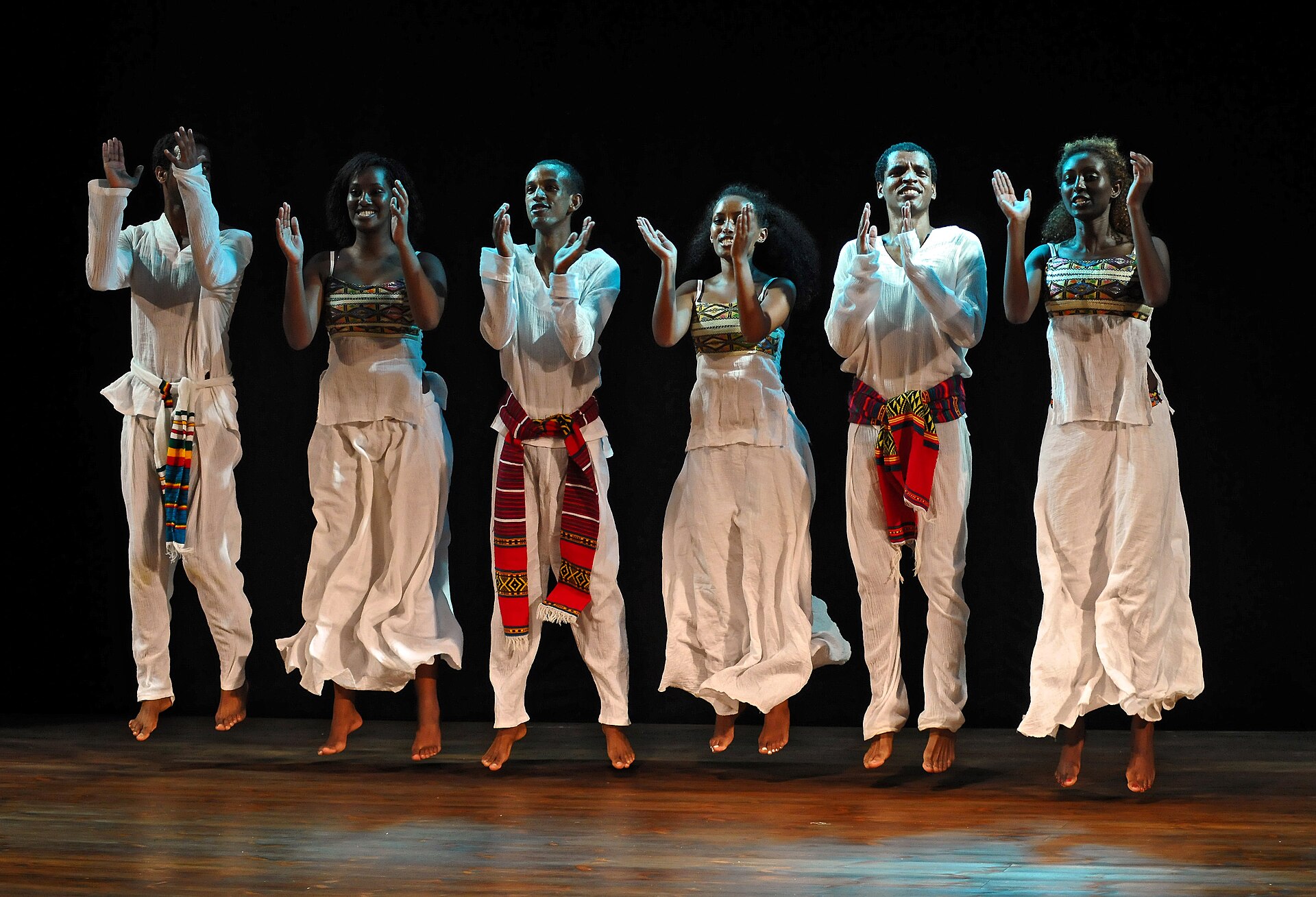
Eskista (እስክስታ) is the dance most people picture when they think of Ethiopia. The dancer keeps the feet and hips fairly still while the shoulders, chest and neck move in fast, sharp rhythms: bouncing, rolling, shrugging and shaking. It is often described as “the dancing shoulders”. Eskista is most closely linked with Amhara highland culture, and related shoulder dances are found in Tigray and among other peoples of the north.
How it is danced
A dancer may start slowly, with small shoulder rolls, then speed up as the drum and clapping get faster. Some styles thrust the chest forward and backward, others jerk the head and neck, others make the shoulders quiver almost too fast to see. Men and women both dance, sometimes facing each other in pairs as a kind of friendly challenge, sometimes in a circle where dancers take turns in the middle.
When people dance it
Eskista is danced especially at weddings, as well as at holidays, graduations and family parties. It is also central to cultural shows in Addis Ababa restaurants. Styles vary between regions and even villages, while stage versions are often faster and more acrobatic than those seen at a country wedding.
Traditional instruments
Krar: the lyre
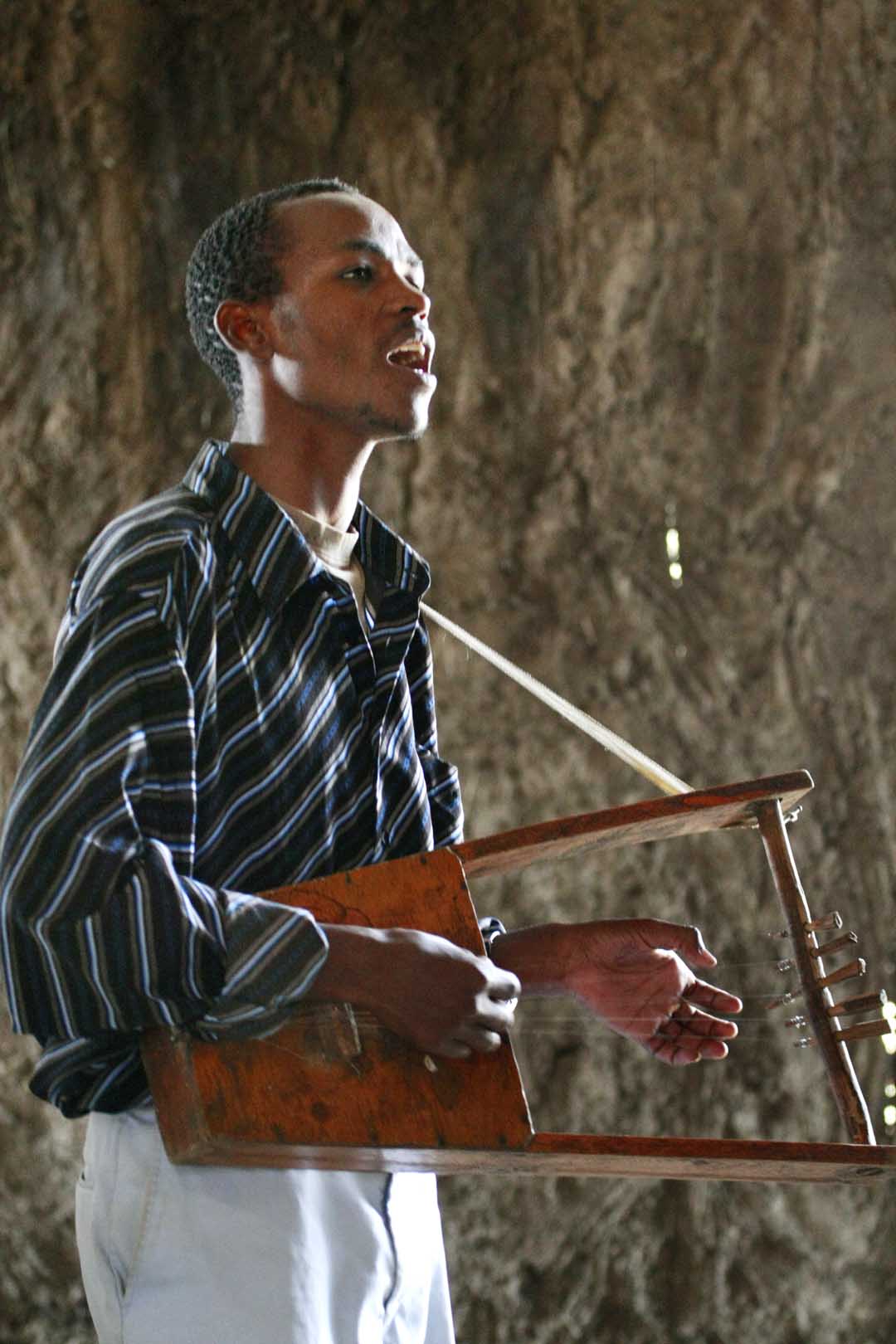
The krar (ክራር) is a small lyre with five or six strings stretched from a bowl-shaped body to a crossbar. Players pluck or strum it, often while singing, and retune it to whichever qenet the song needs. It is the classic instrument of love songs and secular music. Modern players often use an electric krar with a pickup.
Masinko: the one-string fiddle
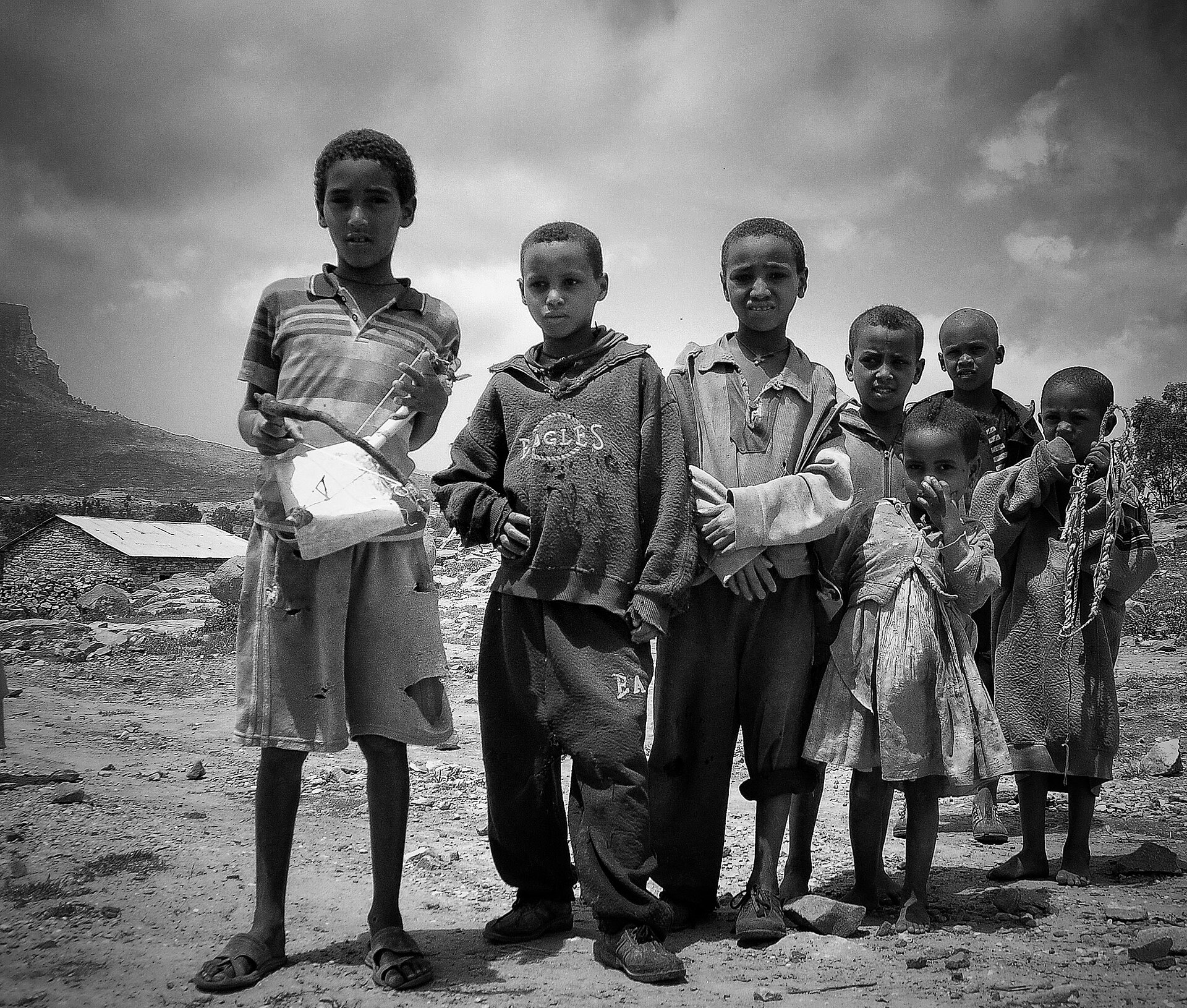
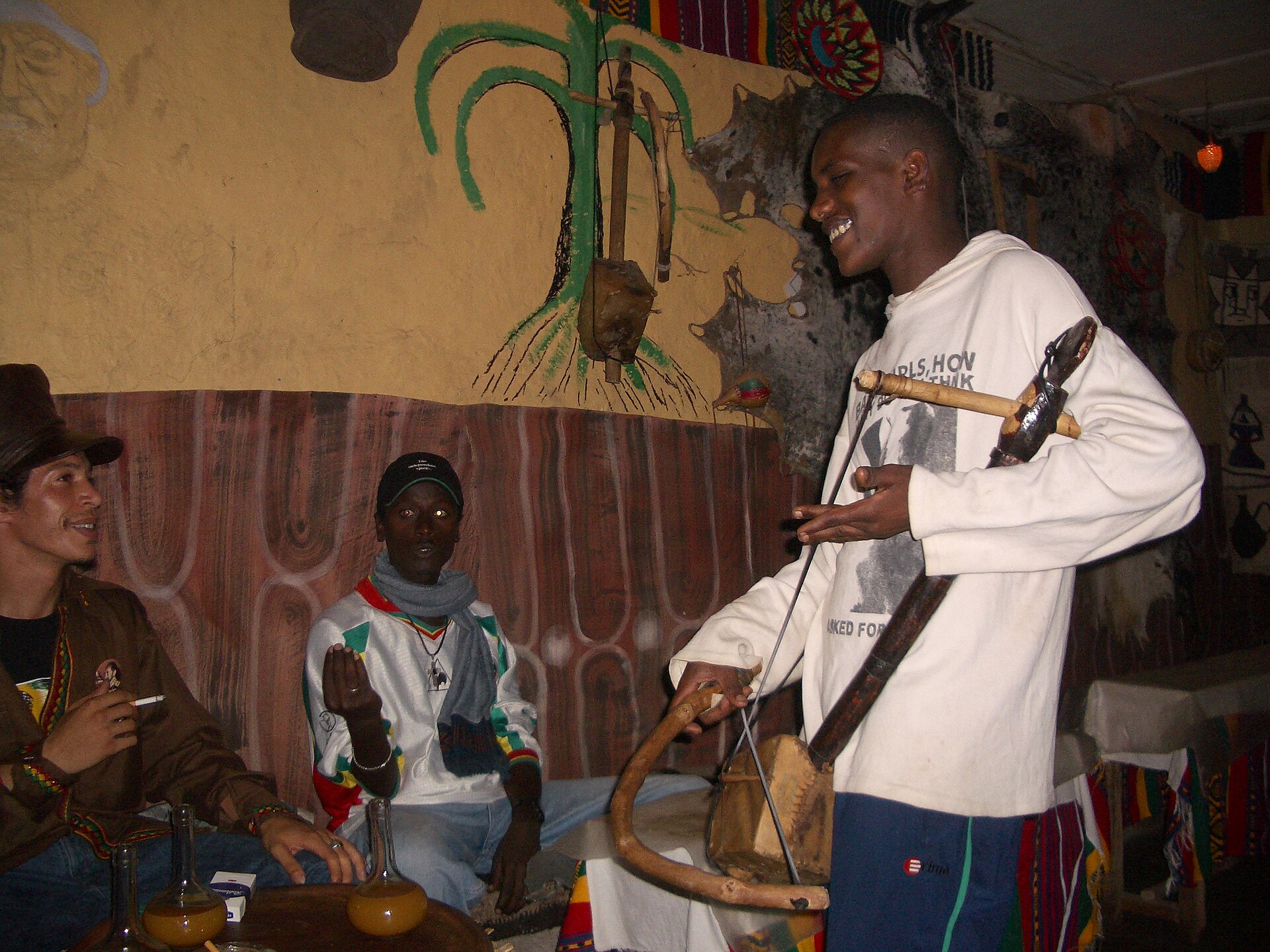
The masinko (ማሲንቆ) has a single horsehair string stretched over a small, diamond-shaped wooden box covered with skin. It is played with a curved bow. The player changes the pitch by pressing the string with the fingers without touching the neck. Its voice-like sound makes it a favourite instrument of azmari singers.
Kebero: the drum
The kebero (ከበሮ) is a large double-headed drum, wider at one end, played with the hands. A smaller version drives secular dance music. The large church kebero is played slowly during chant and, on feast days, in the celebrations around the procession.
Washint: the flute
The washint (ዋሽንት) is a bamboo flute blown from the end, usually with four finger holes. It is the instrument of shepherds and the countryside, and its breathy tone often opens a recording or plays between verses.
Begena: the great lyre
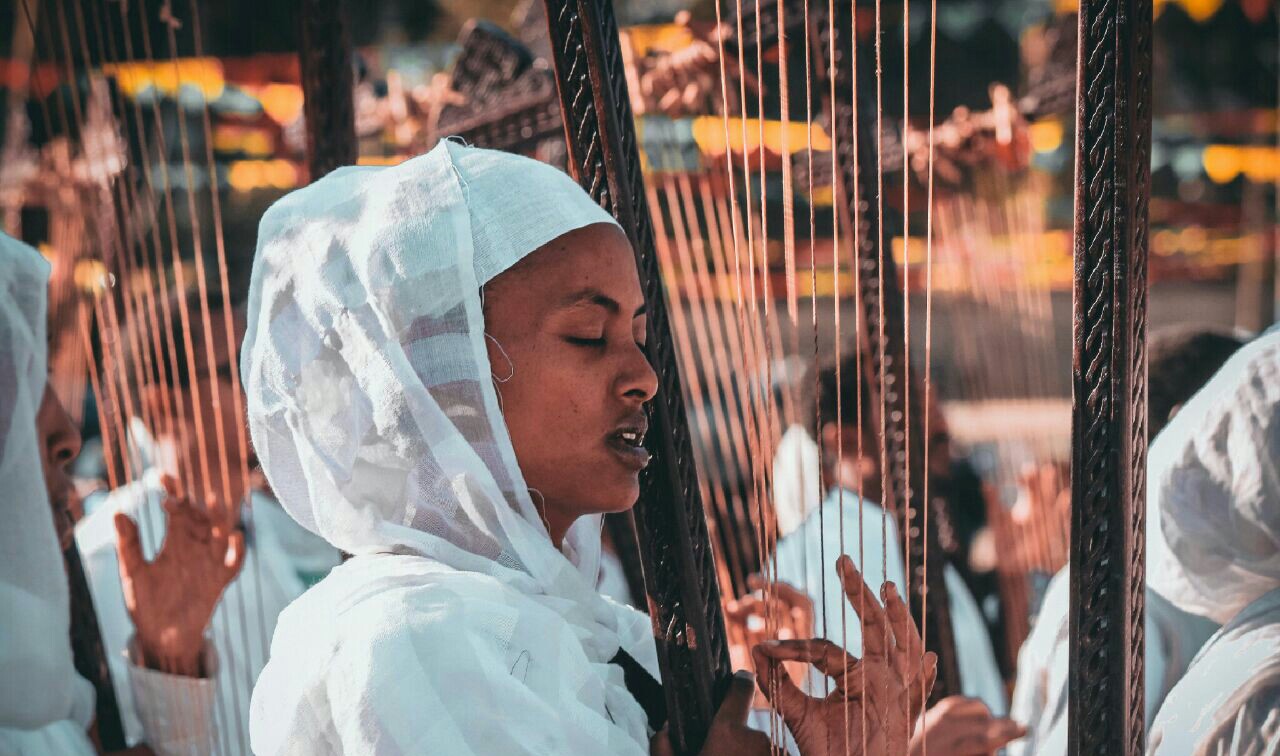
The begena (በገና) is a large lyre, often more than a metre tall, with ten strings. Small pieces of leather under the strings give it a deep buzzing tone. It is a spiritual instrument, played for meditation and prayer, and especially during the long Lent fast before Easter, when other music is put aside. Tradition links it to the harp of King David, and the songs are often settings of the Psalms. The begena is played by the singer alone, quietly, with no dancing.
The four qenet: Ethiopia’s musical modes
The highland tradition names four main qenet (also spelled kiñit). Each is associated with particular songs, moods and styles of ornament. Tizita and Bati each have a major and a minor form. Traditional instruments are generally not tuned like a piano, and sources and musicians disagree on the exact notes, so the descriptions below say what each qenet sounds like rather than listing its notes.
Tizita
Tizita (ትዝታ) means “memory” or “nostalgia” in Amharic, and it is the mode of longing for a lost love, a lost place or the past. Tizita is also the name of a whole family of songs, and almost every great Ethiopian singer has recorded one. The major form matches the major pentatonic scale, which is one reason Tizita songs feel familiar to foreign ears.
Bati
Bati takes its name from a town in Wollo, in the north-east. It is used for many popular songs and has a major and a minor form, and it gives many Ethiopian pop songs their bright sound.
Ambassel
Ambassel often sounds solemn and slightly mysterious to listeners used to Western scales. It is used for many traditional and religious songs.
Anchihoye
Anchihoye is the least often described of the four, and writers disagree about its notes. Listeners often find it the most unusual of the set.
Hearing the difference
The difference is audible without knowing the names. Tizita often sounds tender and familiar, while Ambassel can sound darker to the same listener. Musicians identify a qenet through its typical phrases and where the melody comes to rest, as well as its mood.
Azmari: Ethiopia’s singing storytellers
The azmari (አዝማሪ) is a professional singer who accompanies himself or herself on the masinko or krar. For centuries azmaris sang at royal courts, weddings and markets, praising patrons, mocking the pompous and passing on news in song. The best of them are quick-witted improvisers who make up verses on the spot about the people in the room.
Azmari verse loves double meanings. The tradition of semenna werq, “wax and gold”, hides a sharper “golden” meaning inside an innocent “wax” one, like the gold in a jeweller’s wax mould. A line that sounds like a compliment can carry a joke at the listener’s expense.
Today, azmaris perform in azmari bet (azmari houses), small music bars in Addis Ababa and other towns. Customers tip a singer, often by pressing a note onto the singer’s forehead, who may then improvise a verse about them. Visitors may also be teased in song; the exchange is intended to be good-natured, and a tip is the customary response.
Regional music and dance
Ethiopia’s regional traditions include:
- *Tigray: guayla.* A circle dance shared with Eritrea. Dancers move round slowly in a ring, clapping and swaying their shoulders, to the steady beat of the kebero, with the pace building through the song.
- Oromo. The largest group in Ethiopia has many regional styles, from songs for weddings and harvests to dances where rows of dancers face each other. The singer Ali Birra, from Dire Dawa, brought Afaan Oromo songs to a national audience from the 1960s onward.
- Somali. The dhaanto is a lively dance and song form, popular at celebrations in the Somali region.
Each of these comes with its own languages, instruments and clothing. A single cultural show in Addis Ababa will often move through several regions in one evening.
Religious music
Orthodox chant and Saint Yared
Ethiopian Orthodox church music, called zema, is traced to Saint Yared, a musician of 6th-century Aksum. According to tradition, he composed the chants of the church year and set them in three modes: ge’ez for ordinary days, ezel for fasts and solemn days, and araray for feasts. The chants are sung in Ge’ez, and a system of small written signs above the text, called melekket, reminds the singer of the melody.
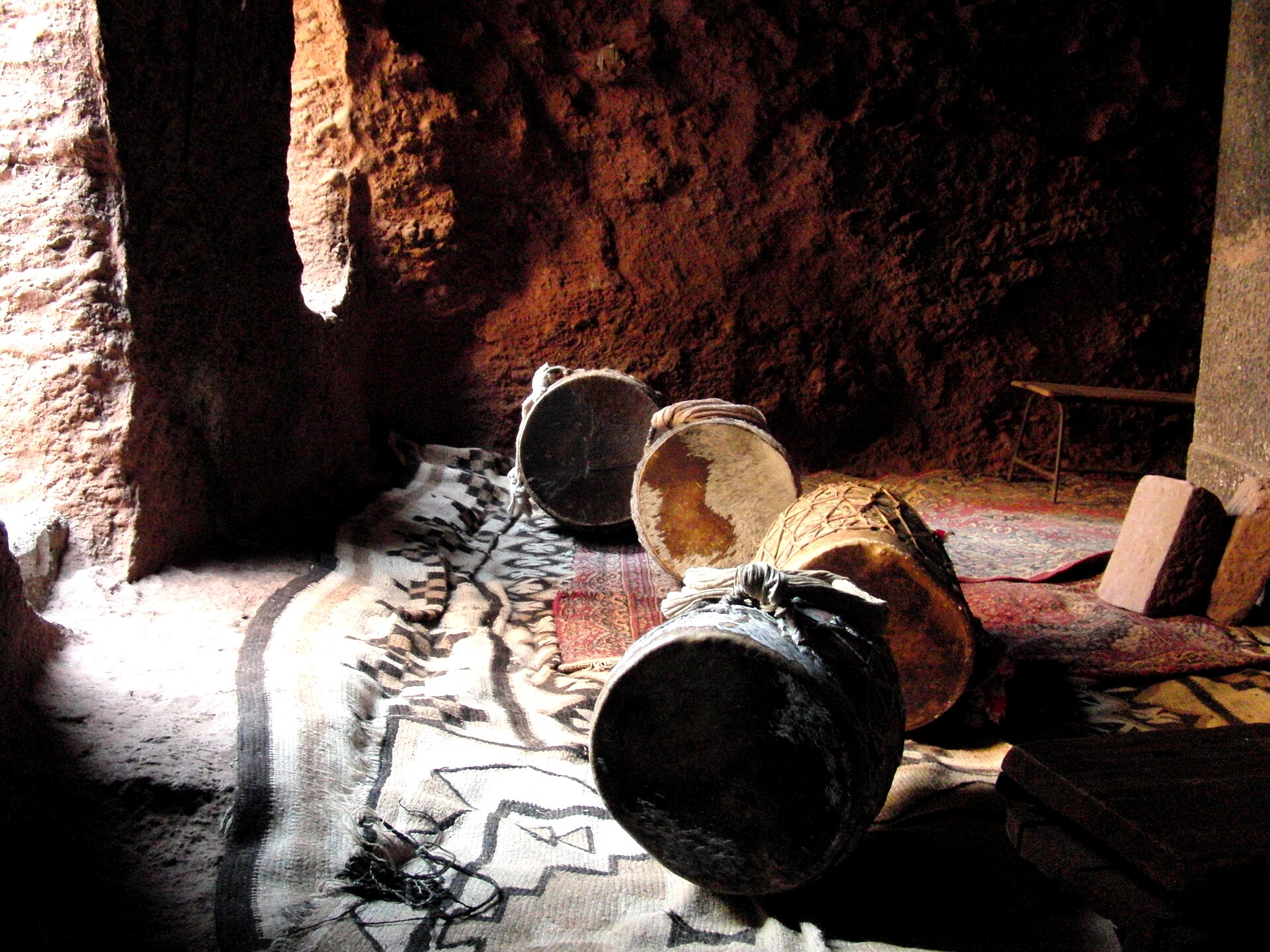
Church chant is learned over many years in church schools. On feast days the trained singers, called debtera, perform aquaquam: slow, swaying chant accompanied by the large kebero, the tsenatsil (a metal rattle) and the mequamia (a tall prayer staff), which they raise and lower in time. You can see this at Timkat, Genna and Meskel. There is more about church life in inside an Ethiopian Orthodox church.
Muslim devotional music
Ethiopia’s Muslim communities have their own song traditions. The best known is manzuma, devotional poetry chanted or sung in Amharic, Afaan Oromo and other languages, especially in Wollo and Harar. Sufi gatherings in Harar and elsewhere also use chant and drumming.
Modern popular music and Ethio-jazz
Brass bands and the radio
Modern Ethiopian popular music began with brass bands. In 1924 the regent Ras Tafari, the future Emperor Haile Selassie, met a band of 40 Armenian orphans in Jerusalem and brought them to Addis Ababa as the first official band. Their Armenian conductor composed the first official anthem of the Ethiopian state. By the 1950s and 1960s the Imperial Bodyguard, the police, the army and the national theatre all had their own orchestras, and they trained a generation of singers and players.
The golden era
From the late 1960s to the mid-1970s Addis Ababa had a lively nightlife. Singers such as Tilahun Gessesse, Mahmoud Ahmed, Alemayehu Eshete, Bizunesh Bekele and Hirut Bekele, and the saxophonist Getatchew Mekurya, mixed Ethiopian qenet with brass, electric guitars, organ and soul and funk rhythms. Small independent labels released hundreds of singles. The scene faded after the 1974 revolution, when curfews closed the clubs.
These recordings reached international audiences decades later through the Éthiopiques CD series, which began reissuing them in 1997.
Mulatu Astatke and Ethio-jazz
Mulatu Astatke, born in Jimma in 1943, studied music in London and the United States and came home with the idea of mixing jazz and Latin rhythms with Ethiopian qenet. He called the result Ethio-jazz. His records from the late 1960s and early 1970s became famous abroad after the Éthiopiques series and their use in the 2005 film Broken Flowers.
Ethiopian music today
Modern Ethiopian pop has audiences at home and in the diaspora, with styles ranging from traditional-sounding songs to hip-hop and electronic music. Krar, masinko and washint still appear in pop arrangements, and many popular songs continue to use the four qenet.
Clothing and dance
Traditional costume is part of the dance. In the highlands, women dance in the habesha kemis, a long white cotton dress with a woven, coloured border called tibeb, and a light shawl, the netela. Men wear white trousers and a cotton tunic, with a shawl over the shoulders. The loose white cotton shows every shoulder movement. Other regions have their own clothing, from Oromo and Gurage dress to the bright cloth of the south. Cultural shows often change costume when presenting dances from different regions.
Where to experience it
- Cultural restaurants in Addis Ababa. Several large restaurants serve traditional food with an evening show of music and dance from different regions. See eating out in Ethiopia.
- Azmari bet. These small music bars are lively and stay open late. Going with a local friend can help visitors understand the improvised lyrics and customs.
- Festivals. Timkat, Meskel and Irreecha all come with singing and dancing in the streets.
- Weddings. An Ethiopian wedding offers a chance to see how people dance eskista at private celebrations.
- Concerts and clubs in Addis Ababa. These venues present modern and jazz music.
When people are dancing at a private event, ask before you film, and at church events keep a respectful distance from the clergy and singers.
Frequently asked questions
What is the traditional dance of Ethiopia?
There are dozens. The best known is eskista, the shoulder dance of the northern highlands, but every region has its own.
What does eskista mean?
It is the name of the dance itself. It is often translated loosely as “dancing shoulders”.
What is the Ethiopian one-string instrument called?
The masinko, a bowed fiddle with a single horsehair string.
What are the four Ethiopian scales?
Tizita, Bati, Ambassel and Anchihoye. Musicians describe major and minor versions of Tizita and Bati.
What is Tizita?
Amharic for “memory” or “nostalgia”. It is both a musical mode and a family of songs about longing.
Who invented Ethio-jazz?
Mulatu Astatke, in the late 1960s.
Is Ethiopian music always pentatonic?
Most traditional highland music uses five-note qenet, but church chant, music from other regions and modern pop often use other scales.