Updated October 2026.
On 1 March 1896, in the mountains around the small northern town of Adwa, the army of Emperor Menelik II defeated an invading Italian army. It was the most decisive defeat of a European colonial power by an African army in the 19th century, and it secured Ethiopia’s independence at a time when almost the whole continent was being divided among European empires. Every year on 2 March (Yekatit 23 in the Ethiopian calendar), Ethiopia celebrates Adwa Victory Day.
Why the battle happened
In 1889 Menelik signed the Treaty of Wuchale with Italy. The Amharic and Italian versions differed on one crucial article: the Italian text claimed it made Ethiopia an Italian protectorate, while the Amharic text said nothing of the kind. When Menelik rejected the Italian reading, Italy, which already held the colony of Eritrea, sent its army south.
The battle
Menelik called on the regional rulers of the empire, and an army of well over 100,000 men marched north, joined by Empress Taytu Betul, who commanded her own troops and played a key role in the campaign. On the night of 29 February 1896, the Italian commander, General Oreste Baratieri, sent his brigades forward through the mountains around Adwa. Confused by the terrain and badly coordinated, they were cut off and defeated one by one the next day. Italy lost thousands of soldiers, and many more were taken prisoner.
What Adwa changed
- In October 1896 the Treaty of Addis Ababa annulled the Treaty of Wuchale, and Italy recognised Ethiopia as fully independent.
- European powers opened diplomatic missions in Addis Ababa, and Ethiopia’s borders were drawn by treaty in the years that followed.
- Adwa became a symbol of resistance across Africa and the African diaspora. The green, yellow and red of the Ethiopian flag were later adopted by many African nations as the Pan-African colours.
Italy invaded again in 1935 and occupied the country until 1941, but Ethiopia was never formally colonised. See Ethiopia: a brief history for the wider story.
Adwa Victory Day, 2 March
The anniversary is a public holiday. In Addis Ababa, crowds gather around the statue of Menelik II in the Piazza area, many in period costume or carrying the flag, with speeches, songs and a parade. The Adwa Victory Memorial, a large museum and monument in central Addis Ababa, tells the story of the battle and is a good visit on any day. See things to do in Addis Ababa.
Visiting Adwa
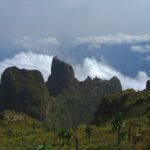
The town of Adwa lies in the Tigray region, about 25 km east of Aksum, surrounded by the jagged peaks that gave the battle its setting, among them the distinctive Soloda mountain. There is little to see of the battlefield itself without a knowledgeable local guide. Read your government’s current travel advice for Tigray before planning a visit; the story is just as well told in the capital’s memorial.
Quick facts
| Date of the battle | 1 March 1896 (Yekatit 23, 1888 in the Ethiopian calendar) |
| Holiday | Adwa Victory Day, 2 March |
| Leaders | Emperor Menelik II and Empress Taytu Betul |
| Result | Ethiopian victory; Italy recognised Ethiopia’s independence |
For more on the calendar date, try the Ethiopian calendar converter, and for more history, see interesting facts about Ethiopia.