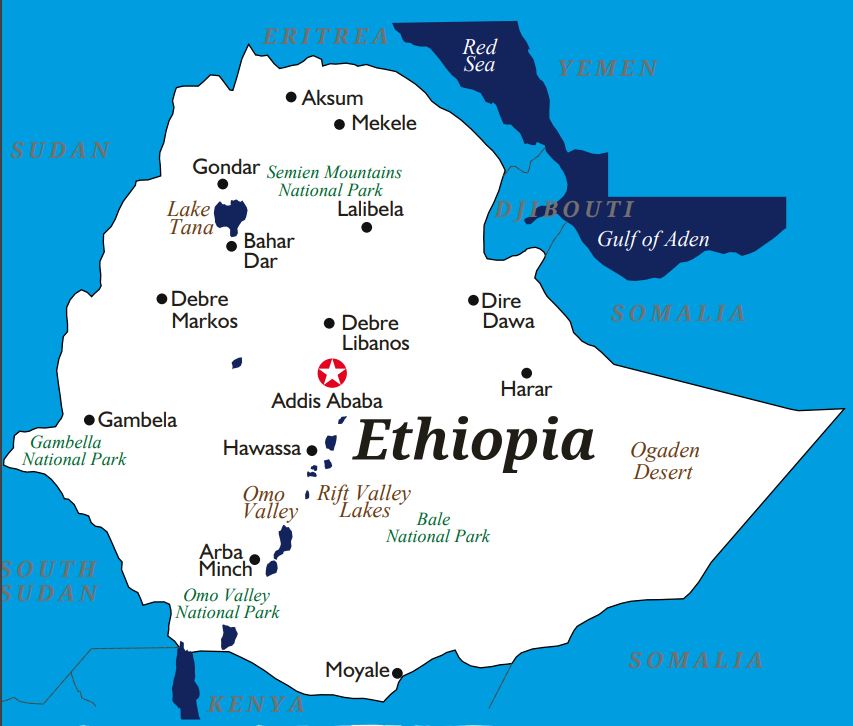
On 24 November 1974, in the dry gullies of Hadar in Ethiopia’s Afar region, the American palaeoanthropologist Donald Johanson and his student Tom Gray spotted a piece of arm bone on a slope. Over the following weeks, the team collected several hundred fragments belonging to one skeleton, roughly 40 percent of the individual. She was about 3.2 million years old and became known around the world as Lucy.
Ethiopia’s fossil record extends from early human relatives that lived 5.8 million years ago to some of the earliest members of our own species. Lucy is one of several discoveries that have shaped the study of human origins.
Why Ethiopia matters for human origins
Ethiopia sits on the East African Rift, where the earth’s crust is slowly pulling apart. Over millions of years, lakes and rivers deposited layers of mud and sand while nearby volcanoes covered the land in ash. Bones buried in those layers were preserved. Continued cracking and erosion now expose the old deposits, bringing fossils to the surface.
The volcanic ash has a second advantage. It contains minerals that can be dated very precisely, so a fossil found between two ash layers can be given a reliable age. Two of Ethiopia’s fossil areas, the Lower Valley of the Awash and the Lower Valley of the Omo, have been UNESCO World Heritage sites since 1980.
The phrase “the cradle of humankind” can be misleading. Important fossils also come from Kenya, Tanzania, Chad, South Africa and Morocco, and our species appears to have emerged across Africa rather than in a single place. Ethiopia nevertheless has one of the longest and richest fossil records known. The site’s guide to the land of origins begins with that record.
Who was Lucy?
The discovery at Hadar
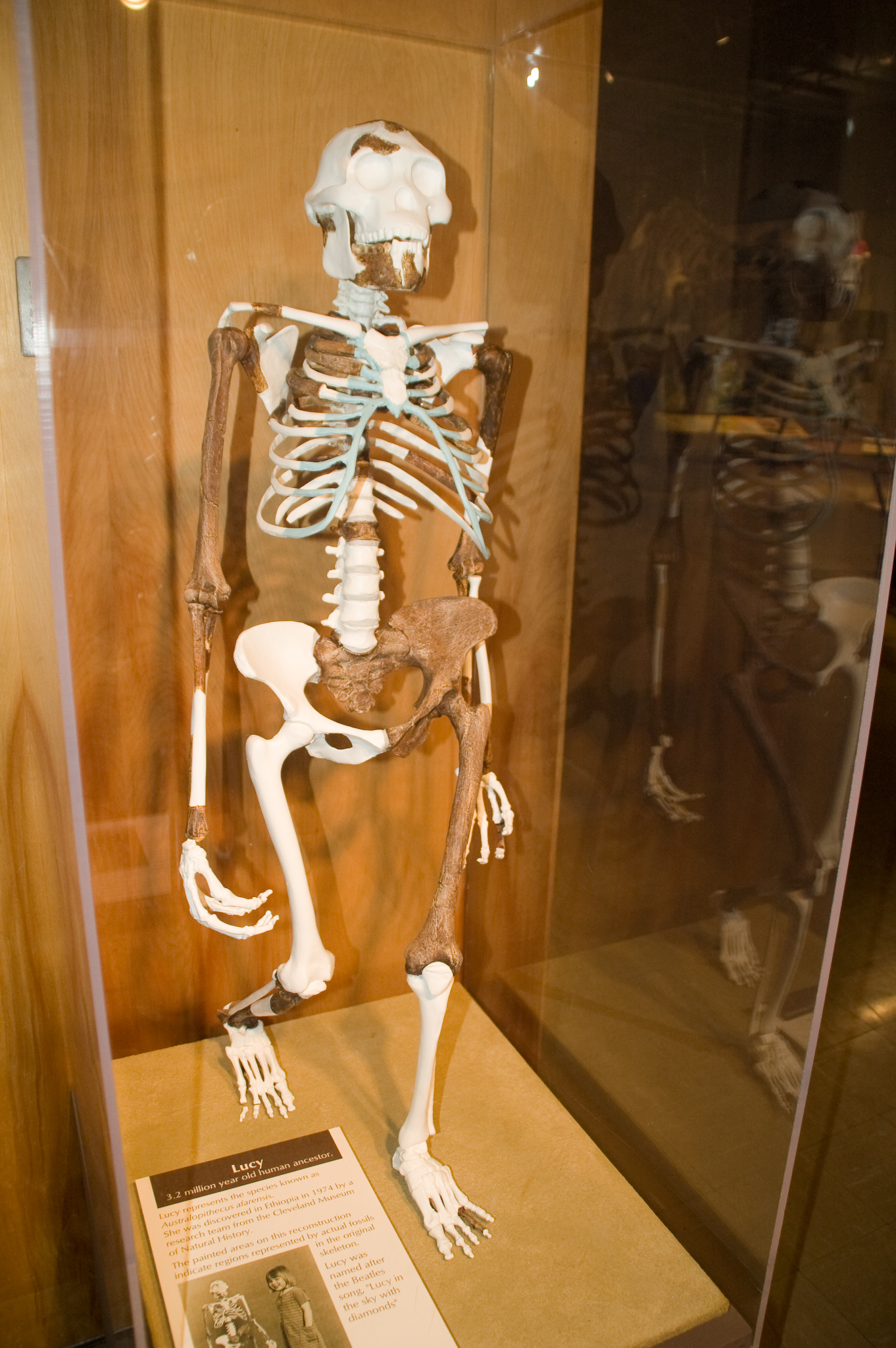
Lucy was found by the International Afar Research Expedition, led by Johanson, the French geologist Maurice Taieb and others. Her scientific name is AL 288-1, after the spot where she lay: Afar Locality 288. Most fossils of human relatives consist of a jaw, a tooth or a piece of skull. Lucy’s remains included parts of her arms, legs, pelvis, spine and ribs, allowing scientists to see how one individual’s body fitted together.
A year later, in 1975, the same team found the bones of at least 13 individuals of the same species close by. That site is known as the “First Family”.
Why is she called Lucy?
On the night of the discovery the camp celebrated, and the Beatles song “Lucy in the Sky with Diamonds” was playing again and again on a tape recorder. Someone started calling the skeleton Lucy, and the name stuck.
In Ethiopia she is also known as Dinknesh (ድንቅነሽ), Amharic for “you are wonderful” or “you are marvellous”.
How old is she, and what was she?
Lucy lived about 3.2 million years ago. She belonged to a species named in 1978 as Australopithecus afarensis, “the southern ape from Afar”. She was not a human in the modern sense, and she was not the “first human”. She was an early member of the wider human family tree, called hominins, which includes us and all our extinct relatives since our line split from that of chimpanzees.
Her teeth show she was an adult, probably a young one, when she died. How she died is still argued over. One study in 2016 suggested her broken bones fit a fall from a tree, but other scientists think the breaks happened after death, as the bones lay in the ground.
What did Lucy look like?
Lucy was small, a little over a metre tall, and probably weighed around 30 kilograms. Her brain was about the size of a chimpanzee’s. Her arms were long compared with her legs, and her fingers were slightly curved.
Any picture or model of her face is a reconstruction. Lucy’s skull survives only in fragments, so artists base it on other afarensis skulls, especially from the First Family site. Her bones tell us her size and how she moved. Her skin, hair and expression are educated guesses.
What Lucy taught scientists
Walking upright came before big brains
Lucy’s pelvis and the angle of her thigh bone at the knee show that she walked on two legs, much as we do. At the time of her discovery, many scientists thought large brains had developed before upright walking. Lucy showed that a small-brained creature was already walking upright. Fossil footprints found at Laetoli in Tanzania, about 3.66 million years old and probably made by her species, later supported this conclusion.
At home on the ground and in the trees
Her long arms, curved fingers and strong shoulders suggest she still climbed trees, perhaps to feed or to sleep safely at night. Lucy lived in a mix of woodland, grassland and riverside forest, and her body suited both worlds.
Why she still matters
Older fossils have been found since 1974, so Lucy is no longer the oldest known hominin. She remains one of the most complete early hominin skeletons and an important reference for researchers.
Ardi: older than Lucy
The discovery at Aramis
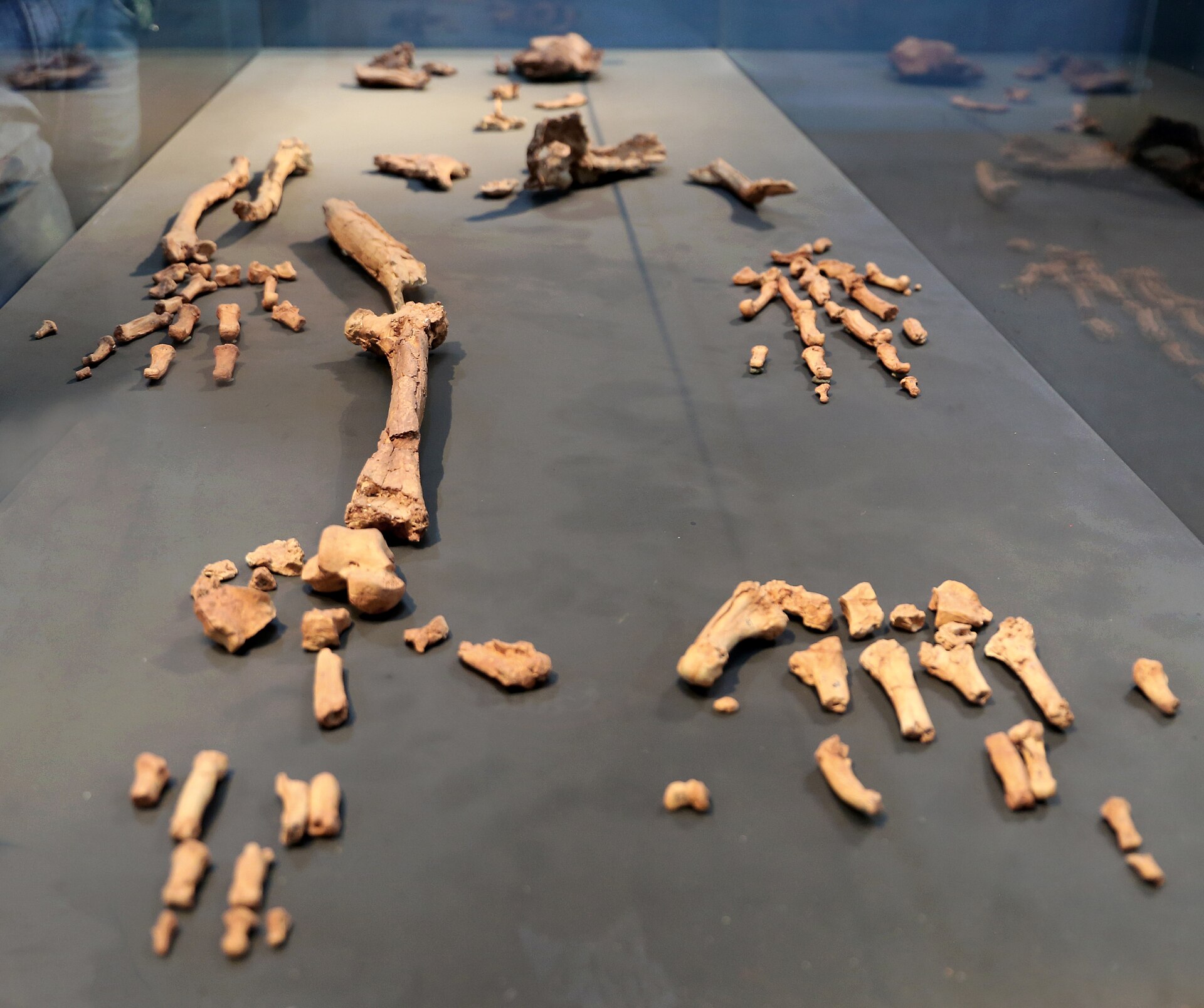
In 1994, at Aramis in the Middle Awash, farther south along the river from Hadar, a team including Yohannes Haile-Selassie, Berhane Asfaw, Giday WoldeGabriel and Tim White began uncovering a skeleton crushed almost to powder. It took 15 years of careful work before it was described in 2009. The skeleton belongs to Ardipithecus ramidus, and the team named it Ardi.
How old is Ardi?
Ardi lived about 4.4 million years ago, more than a million years before Lucy. She was about 1.2 metres tall and weighed around 50 kilograms.
Could Ardi walk upright?
Ardi’s body combines features suited to different kinds of movement. Her upper pelvis suggests she could walk on two legs on the ground, while her foot had a big toe that extended sideways to grip branches, like an ape’s. Her flexible hands were not built for knuckle-walking like a chimpanzee’s. Fossil plants and animals found around her point to woodland rather than open grassland, challenging the old idea that our ancestors stood up after moving onto the savanna. Scientists still debate how often, and how well, she walked.
Selam: the 3.3-million-year-old child
The find at Dikika
In 2000, the Ethiopian palaeoanthropologist Zeresenay Alemseged and his team found the skull of a child at Dikika, across the Awash River from Hadar. Freeing the bones from the sandstone took years, and the find was announced in 2006. The team named her Selam, meaning “peace” in Amharic.
Lucy’s baby?
Selam is sometimes called “Lucy’s baby” because she belongs to the same species, Australopithecus afarensis. They were not related in any family sense. Selam lived about 3.3 million years ago, more than 100,000 years before Lucy.
What she shows about childhood
Selam was about three years old when she died. Her skull, with baby teeth and adult teeth still forming inside the jaw, shows how fast her species grew up. She even preserves a hyoid, the small bone in the throat that supports the tongue, which is almost never found in fossils. Her legs show she walked upright, while her shoulder blades are shaped for climbing, the same mix seen in Lucy.
The Omo Kibish fossils: early members of our own species
Where were they found?
In 1967 a team led by Richard Leakey found two partial skulls, called Omo I and Omo II, in the Kibish rock formation beside the Omo River in south-western Ethiopia. Omo I has the high, rounded skull of a modern human. These are fossils of our own species, Homo sapiens.
How old are they?
For decades their age was uncertain. In 2005 a new study dated them to about 195,000 years. Then, in 2022, researchers matched a layer of volcanic ash just above the fossils to a huge eruption of the Shala volcano in the Ethiopian Rift. That pushed the minimum age of Omo I to about 230,000 years. It is a minimum: the skull lies below the ash, so it could be older still.
Why Omo matters
Omo I is one of the oldest known fossils of our species with a clearly modern skull. Skulls about 300,000 years old from Jebel Irhoud in Morocco also show some modern features. Together they suggest Homo sapiens took shape across Africa over a long period, with different features appearing in different places.
Other important Ethiopian finds
Other important finds include:
- Ardipithecus kadabba (5.8 to 5.2 million years old), from the Middle Awash, among the oldest known hominins.
- The Woranso-Mille skull (about 3.8 million years), found in Afar in 2016 by a local herder, Ali Bereino, working with Yohannes Haile-Selassie’s team. It is the first good skull of Australopithecus anamensis, the species thought to come just before Lucy’s.
- The Ledi-Geraru jaw (about 2.8 million years), found in 2013 by the Ethiopian student Chalachew Seyoum. It is the oldest fossil yet assigned to our own genus, Homo.
- Stone tools from Gona and Ledi-Geraru (about 2.6 million years), among the oldest known stone tools of the Oldowan kind. Marked animal bones from Dikika, about 3.4 million years old, may be even older evidence of tool use, though this is debated.
- The Herto skulls (about 160,000 years), from the Middle Awash, early Homo sapiens. Cut marks on one suggest the dead were handled in some kind of ritual.
- Melka Kunture, about 50 kilometres south of Addis Ababa on the upper Awash, where layers of stone tools and bones span well over a million years.
Selected timeline of Ethiopian fossils
| Fossil | Species | Approximate age | Where found | Year found |
|---|---|---|---|---|
| Ardipithecus kadabba | Ardipithecus kadabba | 5.8 to 5.2 million years | Middle Awash | 1997 onwards |
| Ardi | Ardipithecus ramidus | 4.4 million years | Aramis, Middle Awash | 1994 |
| Woranso-Mille skull | Australopithecus anamensis | 3.8 million years | Woranso-Mille, Afar | 2016 |
| Selam | Australopithecus afarensis | 3.3 million years | Dikika, Afar | 2000 |
| Lucy | Australopithecus afarensis | 3.2 million years | Hadar, Afar | 1974 |
| Ledi-Geraru jaw | early Homo | 2.8 million years | Ledi-Geraru, Afar | 2013 |
| Omo I | Homo sapiens | at least 230,000 years | Omo Kibish | 1967 |
| Herto skulls | Homo sapiens | 160,000 years | Herto, Middle Awash | 1997 |
The timeline is a selection rather than a family tree. Scientists do not know which of these species, if any, were our direct ancestors, and new finds regularly change the picture.
Where can you see Lucy?
The National Museum of Ethiopia
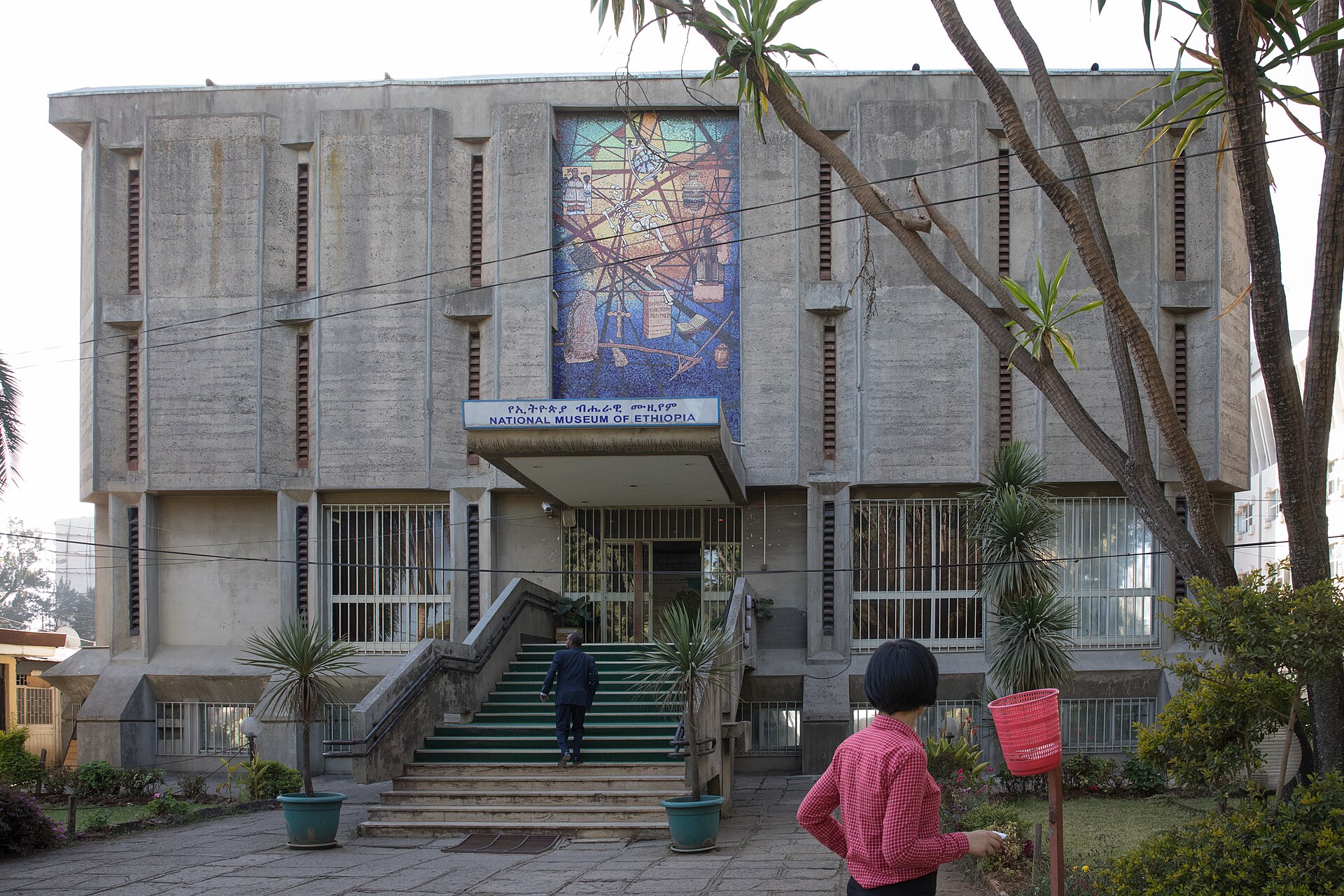
Lucy is housed at the National Museum of Ethiopia in Addis Ababa, near the university’s main campus at Sidist Kilo. The palaeontology hall downstairs displays a full cast of her skeleton, casts of Selam, Ardi and other finds, and a life-size model of Lucy. The museum is included in this list of things to do in Addis Ababa.
Are the real bones on display?
Usually not. The original bones are fragile and are kept in a secure vault at the museum, where scientists can study them. What visitors see is a precise cast. The originals have travelled abroad only rarely, most notably on a tour of the United States from 2007 to 2013 and to Prague in 2025, when Selam’s original skull went too. If seeing the original matters to you, ask the museum before you go.
Ethiopia’s own scientists
The early expeditions were led mostly by foreign researchers, but for decades Ethiopian scientists have led many of the biggest finds. Berhane Asfaw, Yohannes Haile-Selassie, Zeresenay Alemseged, Giday WoldeGabriel and Sileshi Semaw, among others, have run long-term field projects, and local Afar workers and herders have spotted many of the fossils. Every fossil found in Ethiopia belongs to Ethiopia: it may leave the country for study only with permission, and must come back.
Frequently asked questions
Was Lucy the first human?
No. She was an early hominin, a relative on the human branch of the family tree, but not a member of our genus Homo and not the oldest hominin known.
Was Lucy an ape or a human?
She was an early hominin. She walked upright like us but had a small, ape-sized brain and long arms suited to climbing.
How old was Lucy when she died?
A young adult. Her wisdom teeth had come through and were slightly worn.
Who found Lucy?
Donald Johanson and Tom Gray, working with the International Afar Research Expedition, on 24 November 1974.
Why is Lucy called Dinknesh?
Dinknesh is Amharic for “you are wonderful”, the name Ethiopians gave her.
Is Ardi older than Lucy?
Yes, by about 1.2 million years.
Is Selam Lucy’s daughter?
No. They are the same species, but Selam lived more than 100,000 years before Lucy.
Can visitors see the real Lucy?
Normally you see a cast at the National Museum in Addis Ababa. The original is kept safe in the museum’s vault.