Updated October 2026. Church entry and guide fees change and are not listed here. Read your government’s current travel advice for the Tigray region before planning a visit, and ask a local guide which churches are open.
Lalibela is famous, but northern Ethiopia hides another, older world of rock churches. Across eastern Tigray, more than a hundred churches are carved into cliffs, caves and the flanks of sandstone mountains, many of them still in use and decorated with centuries-old paintings. Some can be reached by car; others need a steep hike or a climb with handholds in the rock. For anyone interested in Ethiopia’s early Christianity, they are among the most extraordinary sites in Africa.
The main areas
- Gheralta. A dramatic range of red sandstone towers and ridges west of the town of Hawzen, home to the most spectacular cliff churches and the best hiking.
- Teka Tesfay and Atsbi. Clusters of churches east and north-east of Hawzen, several of them easier to reach.
- Wukro. The town on the main road from Mekele, with a rock church on its outskirts that is the most accessible of all.
Churches to know
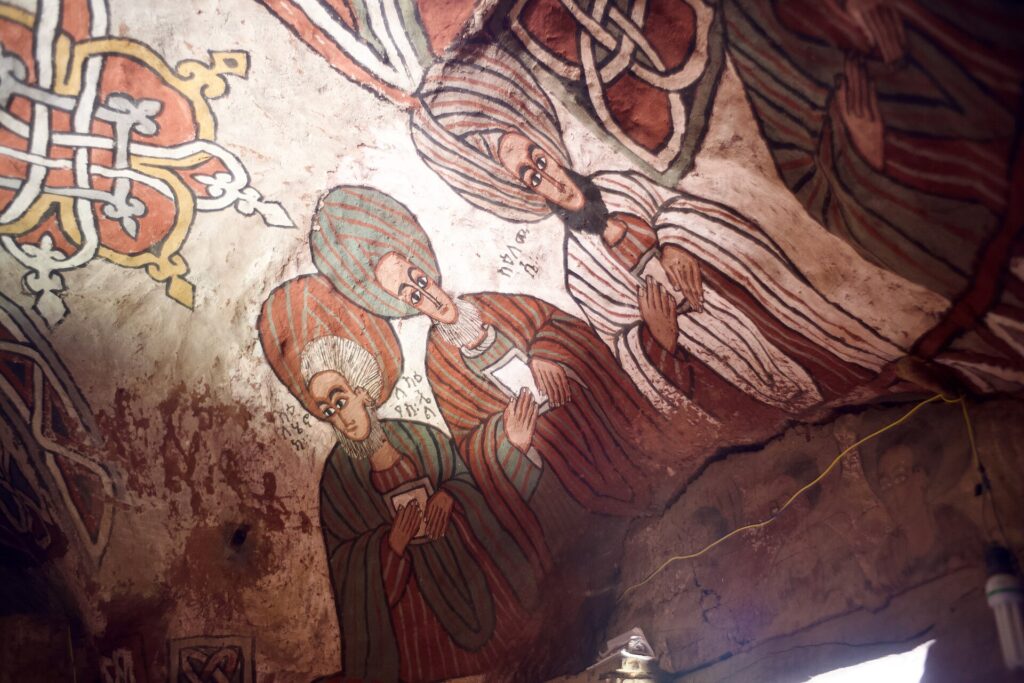
- Abuna Yemata Guh. Cut high into a sandstone pinnacle in Gheralta, reached by a hike, a climb up a near-vertical rock face using footholds, and a narrow ledge above a long drop. Inside, the domed ceilings are covered in paintings of saints and apostles. Only for those comfortable with heights; local guides and climbers help you up.
- Maryam Korkor and Daniel Korkor. On the top of a Gheralta ridge, reached by a steep walk of about an hour. Maryam Korkor is a large church with fine paintings; tiny Daniel Korkor sits on the cliff edge beside it with views across the valley.
- Wukro Cherkos. A rock church close to the road at Wukro, with carved pillars and arches. Easy to visit.
- Debre Damo. Not a rock church but one of the oldest monasteries in Ethiopia, on a flat-topped mountain in the north reached only by climbing a leather rope up a cliff. Traditionally founded in the 6th century, it is open to men only.
How old are they?
Local tradition dates some churches to the early centuries of Ethiopian Christianity, soon after the conversion of the kingdom of Aksum in the 4th century. Scholars generally date most of them between the 10th and 15th centuries. Either way, they predate or match Lalibela and show how deeply rooted Orthodox Christianity is in the north. See Aksum history for the background.
Visiting
- Bases: Mekele, the regional capital, has an airport; Hawzen and Wukro are closer to the churches and have lodges.
- Guides: a local guide is essential to find the churches, contact the priests who hold the keys and arrange fees. Some churches need advance notice.
- Clothes and shoes: modest clothes, a scarf for women, and good shoes or boots for the climbs. You will remove your shoes at the church door.
- Photography: flash is not allowed; ask before photographing priests and paintings.
When to go
October to March is dry and clear and the best time for hiking. From June to September the rains make paths slippery. See when to visit.
For other historic sites in the north, see Aksum, Gondar and Ethiopia’s UNESCO World Heritage Sites.