Updated October 2026.
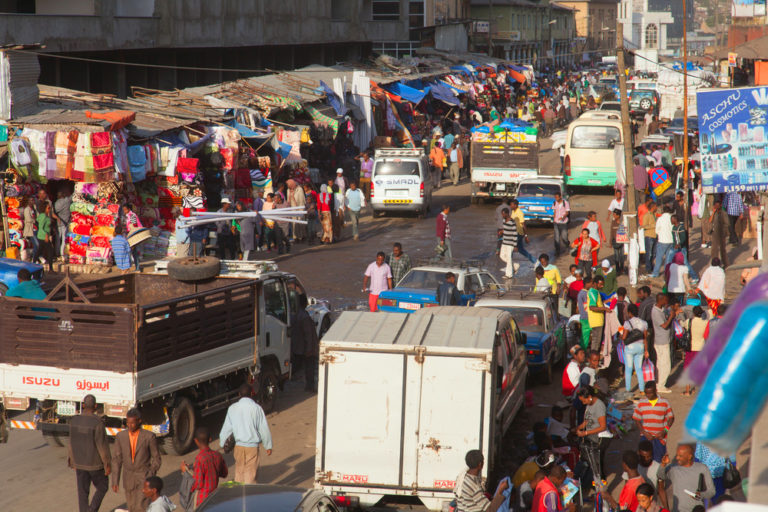
Ethiopia has fixed-price boutiques in Addis Ababa as well as Merkato, one of Africa’s largest open-air markets. At Merkato and many other markets, sellers offer almost everything and expect customers to bargain. Some goods, including cultural heritage and wildlife products, cannot legally be exported.
Where to shop in Addis Ababa
- Merkato. This large market district has streets, sheds and alleys organised by trade, with separate areas for spices, baskets and recycled metal. Go in the morning, take only the money you need and consider visiting with a local friend or guide the first time. Merkato has its own guide.
- Shiro Meda. The place for handwoven cotton: scarves (netela), shawls (gabi) and the white embroidered dresses (habesha kemis) worn at holidays. Stalls line the road below Entoto.
- Souvenir shops on Churchill Avenue and around Piazza. Crosses, jewellery, paintings, baskets and leather goods in one place, often at fixed or lightly negotiable prices.
- Supermarkets and coffee roasters for packed coffee, spices and honey with proper labels, which travel better than loose market produce.
How bargaining works
Markets and street stalls usually expect bargaining. Ask the price, offer less and settle somewhere in between. Keep the exchange friendly. Walking away politely is part of the process and may bring a better price. Shops, supermarkets and hotels generally have fixed prices.
Pay in birr and carry small notes, because change can be short. Ethiopian birr notes shows what they look like, and using foreign cards and ATMs explains where cards are accepted. Larger shops may take cards.
Common souvenirs
- Coffee. Ethiopia is coffee’s birthplace. Buy roasted beans in sealed bags, or green beans if you roast at home. Look for regional names such as Yirgacheffe (see Gedeo), Sidamo and Harar.
- Spices. Berbere, the red chilli blend behind most stews, and mitmita, the hotter one served with kitfo. Buy them sealed.
- Handwoven cotton. A netela or gabi from Shiro Meda is light and practical.
- A jebena and cups. The clay coffee pot used in the coffee ceremony. Wrap it well; it is fragile.
- Hand crosses and jewellery. The Ethiopian cross comes in dozens of regional designs, in silver, brass or wood.
- Baskets. Colourful woven baskets, including the mesob, the basket-table injera is served from.
- *Honey and tej spices*, and leather goods such as bags and sandals.
What not to take out of the country
Do not buy genuine antiques, including old manuscripts, church icons, processional crosses or anything taken from a church or monastery. Cultural heritage items require an export permit from Ethiopia’s heritage authority, and officials may seize old religious objects at the airport. New pieces made for sale are generally acceptable. If a seller claims that an item is very old, do not buy it.
Ivory and wildlife products such as skins are illegal to buy and to export. Check your own country’s import rules too, especially for food, seeds, plants and leather.
Practical shopping tips
- Keep your phone and wallet in a front pocket or zipped bag in busy markets.
- Ask before photographing traders and their goods.
- Ask for a receipt in shops for anything valuable.
- Leave space in your bag: coffee and woven cotton are heavier than they look.
For presents to give while you are in Ethiopia, see gifts in Ethiopia. The guide to things to do in Addis Ababa includes more places to visit in the city.