Updated October 2026. Boat, entry and guide prices change and are not listed here; agree the boat price before you set off.
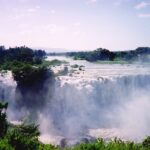
Bahir Dar is one of Ethiopia’s most relaxed cities: wide avenues lined with palm trees and jacarandas on the southern shore of Lake Tana, the country’s largest lake and the source of the Blue Nile. From the waterfront, boats head out to island and peninsula monasteries that have guarded painted churches and old manuscripts for centuries, and the Blue Nile Falls are a short drive away.
Bahir Dar is in the Amhara region. Read your government’s current travel advice before planning a visit.
Lake Tana
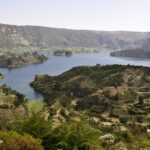
Lake Tana covers roughly 3,000 square kilometres at about 1,800 metres above sea level. Fishermen still go out on tankwa, slender boats made of bundled papyrus reeds, and the lake is rich in birdlife, from pelicans and kingfishers to fish eagles. It is also the source of the Abay, the Blue Nile, which leaves the lake just east of Bahir Dar and later joins the White Nile in Khartoum. You can see the outflow from the bridge on the road to the falls, and hippos are sometimes spotted near it.
The monasteries
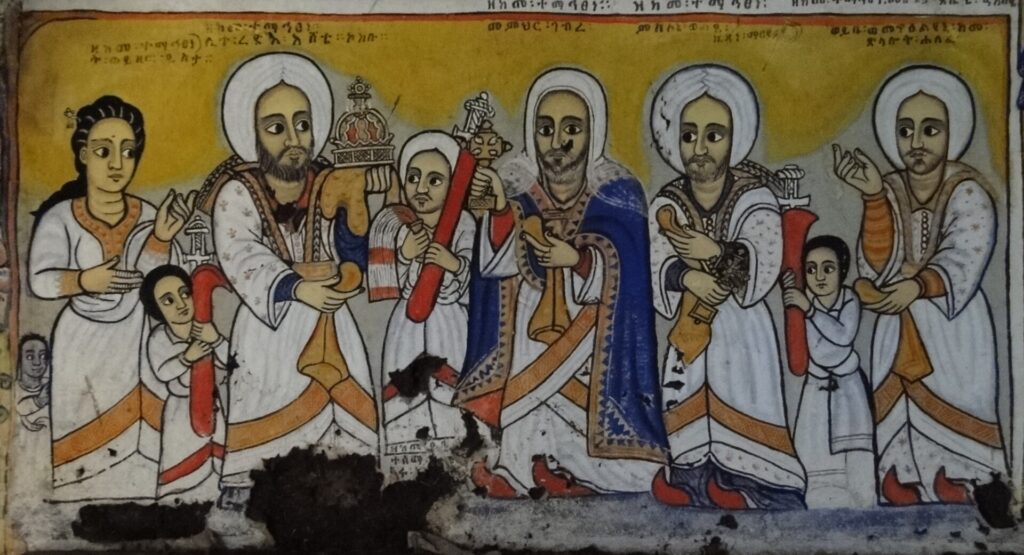
More than twenty churches and monasteries stand on the islands and peninsulas of Lake Tana. Many date back to the 14th–17th centuries and are famous for their wall paintings.
- Ura Kidane Mehret, on the Zege Peninsula, is the most visited: a round church with a thatched roof in a coffee forest, its inner walls covered in vivid paintings of saints and Bible stories. It is open to both men and women.
- Azuwa Maryam and other churches on the Zege Peninsula can be combined with Ura Kidane Mehret in a half-day trip.
- Kebran Gabriel and some of the island monasteries are traditionally open to men only. Ask before you go.
- Farther out, Narga Selassie on Dek Island and Daga Estifanos, where the remains of several emperors are kept, make a full-day trip.
Boats leave from the hotels and the waterfront in Bahir Dar. A half-day trip to the Zege Peninsula is the classic first outing. Take a hat, sunscreen and water, and small notes for church entry and tips.
In Bahir Dar itself
- The waterfront: walk along the lake at sunset, or watch the pelicans.
- Bezawit Hill: views over the city, the lake and the Blue Nile outflow.
- The market: a lively place to see baskets, cotton and local produce.
- Cafés and fish: Bahir Dar is one of the best places in Ethiopia for fresh fish, often served as asa tibs or fried whole.
Getting there
- By air: daily flights from Addis Ababa take about an hour.
- By road: about 560 km from Addis Ababa, a long day’s drive, or about 180 km south of Gondar.
Bahir Dar fits well into a circuit with Gondar, the Simien Mountains, Lalibela and Aksum. See attractions by region.
When to go
October to May is dry and sunny. From June to September the rains turn the countryside green and swell the Blue Nile Falls, but boat trips can be wet. Timkat in January is celebrated with colour on the lakeshore. See when to visit.
Tips
- Dress modestly and remove your shoes inside churches; women should cover their hair.
- Ask before photographing priests and paintings; flash is usually not allowed.
- Use insect repellent in the evenings near the lake.