Updated October 2026.
If you are vegan, Ethiopia may be the easiest country in the world to eat in. Members of the Ethiopian Orthodox Tewahedo Church fast on well over 150 days a year, and fasting here means no meat, no eggs and no dairy. Restaurants everywhere serve yetsom migib (የጾም ምግብ), “fasting food”: a whole vegan cuisine built on lentils, chickpeas, split peas, vegetables and injera. This guide explains when the fasts fall and what to order.
When Ethiopians fast
- Every Wednesday and Friday, in memory of the betrayal and the crucifixion of Christ, except in the 50 days after Easter.
- Abiy Tsom (Lent), the great fast of 55 days before Easter. In 2027 Easter (Fasika) falls on 2 May, so Lent begins on Monday 8 March.
- Tsome Nebiyat (Advent), about 43 days before Genna, Ethiopian Christmas on 7 January. It begins in late November.
- Filseta, the 16-day fast before the feast of the Assumption, in August.
- Shorter fasts, including the Fast of Nineveh, the Fast of the Apostles, and the eves of Genna and Timkat.
Many devout people also eat nothing at all until midday or mid-afternoon on fasting days. Ethiopian Muslims, around a third of the population, fast from dawn to dusk during Ramadan.
For visitors this means two things: on fasting days the vegan dishes are at their freshest and most varied, and on some days a meat dish can be harder to find outside tourist restaurants.
Fasting dishes to order
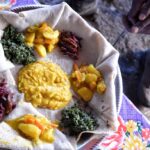
- Beyaynetu. “A bit of everything”: a platter of five to ten fasting dishes on one injera. The best introduction.
- Shiro. Ground chickpeas or broad beans simmered into a thick, smooth stew, often served bubbling in a clay pot. The everyday comfort food of Ethiopia.
- Misir wat. Red lentils in a rich berbere chilli sauce.
- Kik alicha. Yellow split peas cooked mildly with turmeric, onion and garlic.
- Gomen. Collard greens with garlic, ginger and a little chilli.
- Atkilt. Cabbage, potato and carrot, mild and gently spiced.
- Fosolia. Green beans and carrots sautéed with onion.
- Azifa. A cold green lentil salad with mustard, onion and chilli.
- Timatim salata. A fresh tomato and chilli salad, sometimes mixed with pieces of injera as timatim fitfit.
- Suf fitfit. Injera soaked in a creamy drink made from sunflower seeds, served cold.
- Ful. Mashed fava beans with onion, tomato and oil, a favourite breakfast.
Tips for vegans and vegetarians
- Say “yetsom”. Asking for yetsom or yetsom migib guarantees a dish without animal products.
- On non-fasting days, check for butter. The same dish name can be cooked with niter kibbeh, spiced clarified butter, when it is not a fasting day. Ask for the fasting version.
- Injera itself is vegan, made from teff flour and water and left to ferment.
- Fish appears on some fasting menus, but strict observers avoid it in Lent; vegans should ask.
- Gluten-free? Pure teff injera is naturally gluten-free, but many restaurants mix in wheat or barley flour. Ask, and do not rely on it if you are coeliac.
Where to eat it
Almost every local restaurant serves fasting food on Wednesdays and Fridays, and many serve it every day. Some of the best beyaynetu is found in simple places packed with office workers at lunchtime. How restaurant meals work is in eating out in Ethiopia, and the rest of the cuisine in Ethiopian dishes to try first and things to know about Ethiopian food.
The feast after the fast
The end of a long fast is one of the happiest moments in Ethiopian family life. After the night service of Genna or Fasika, families break the fast with doro wat, meat and butter, coffee and bread. If you are invited, you will be fed generously; see being a guest in an Ethiopian home.