This page is about the plants and animals themselves. For landscapes and regions, see nature in Ethiopia. For where to see wildlife, see the national parks.
Ethiopia has a rich and unusual wildlife, partly because it has so many different habitats and partly because its highlands are cut off from similar mountains elsewhere in Africa. Conservation scientists count parts of the country within two global biodiversity hotspots, the Eastern Afromontane and the Horn of Africa. Many species live nowhere else.
Plants
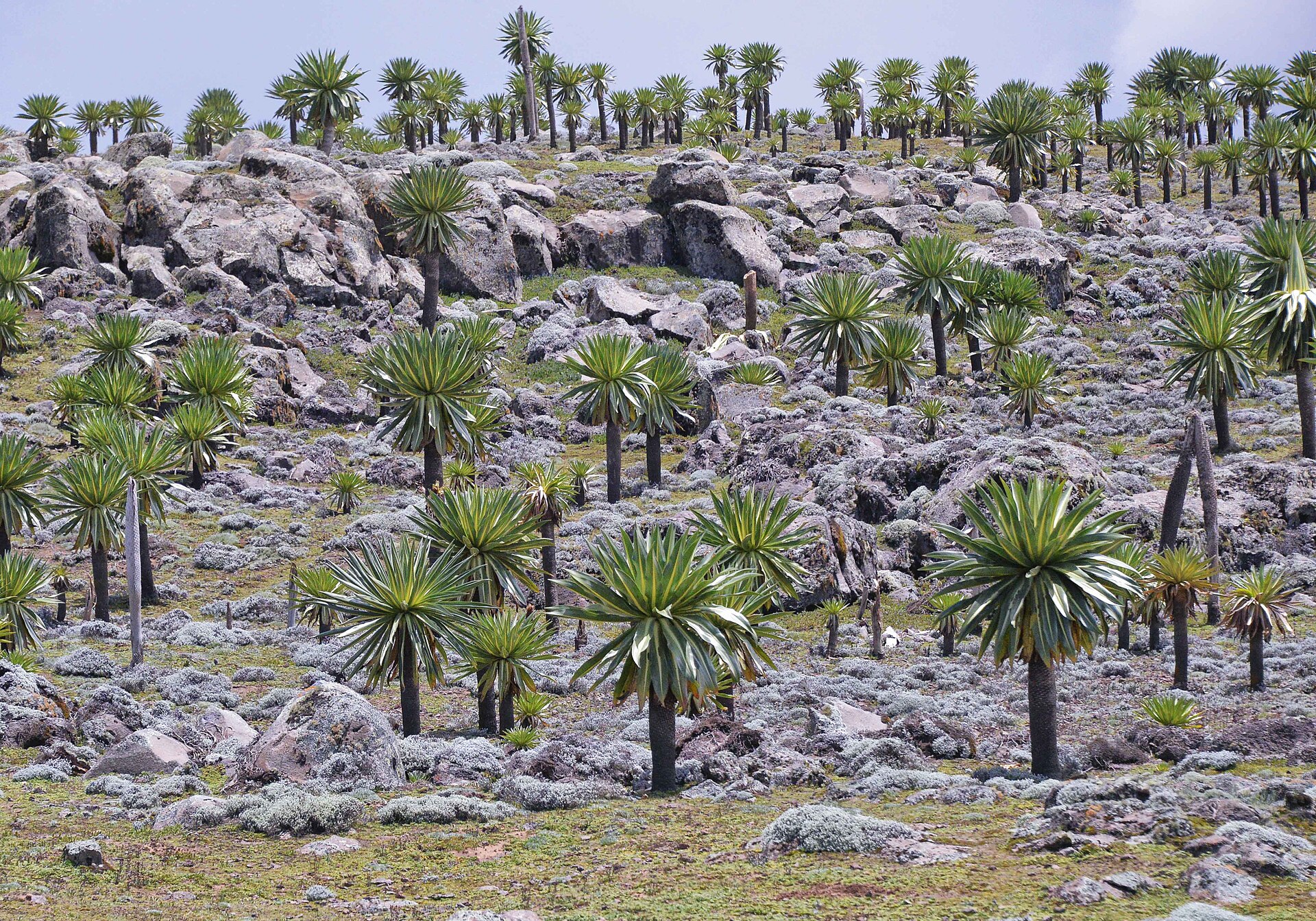
Plant life follows altitude, so a journey from the lowlands to the high plateau passes through several different worlds.
- Lowland scrub and acacia savanna, below about 1,500 metres, in the Rift Valley and the east. Flat-topped acacia trees, thorny shrubs and grass cover much of the dry lowlands.
- Dry forest and woodland, on the slopes, where juniper and wild olive trees grow.
- Montane forest, in the south-west and the Bale Mountains, home to the wild coffee plant. Ethiopia is where coffee first grew. See the coffee ceremony and Gedeo.
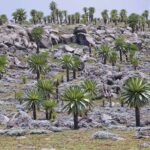
- Afroalpine moorland, above about 3,200 metres, with giant lobelias, heather and tussock grass. The high plateau of the Bale Mountains is the largest area of Afroalpine habitat in Africa.
The dry lowlands of the east are the home of trees that produce frankincense and myrrh, resins that were traded for thousands of years and are still burned in Ethiopian homes and churches.
In farming areas the key crops are teff, the tiny grain used to make injera, and enset, the “false banana” that is the staple food of the south. Many highland churches are surrounded by patches of old forest, which are among the last native woods in the north. The church forests are protected by the clergy, and they serve as islands of biodiversity in a farmed landscape.
Animals
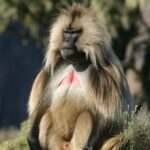
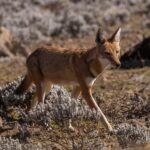
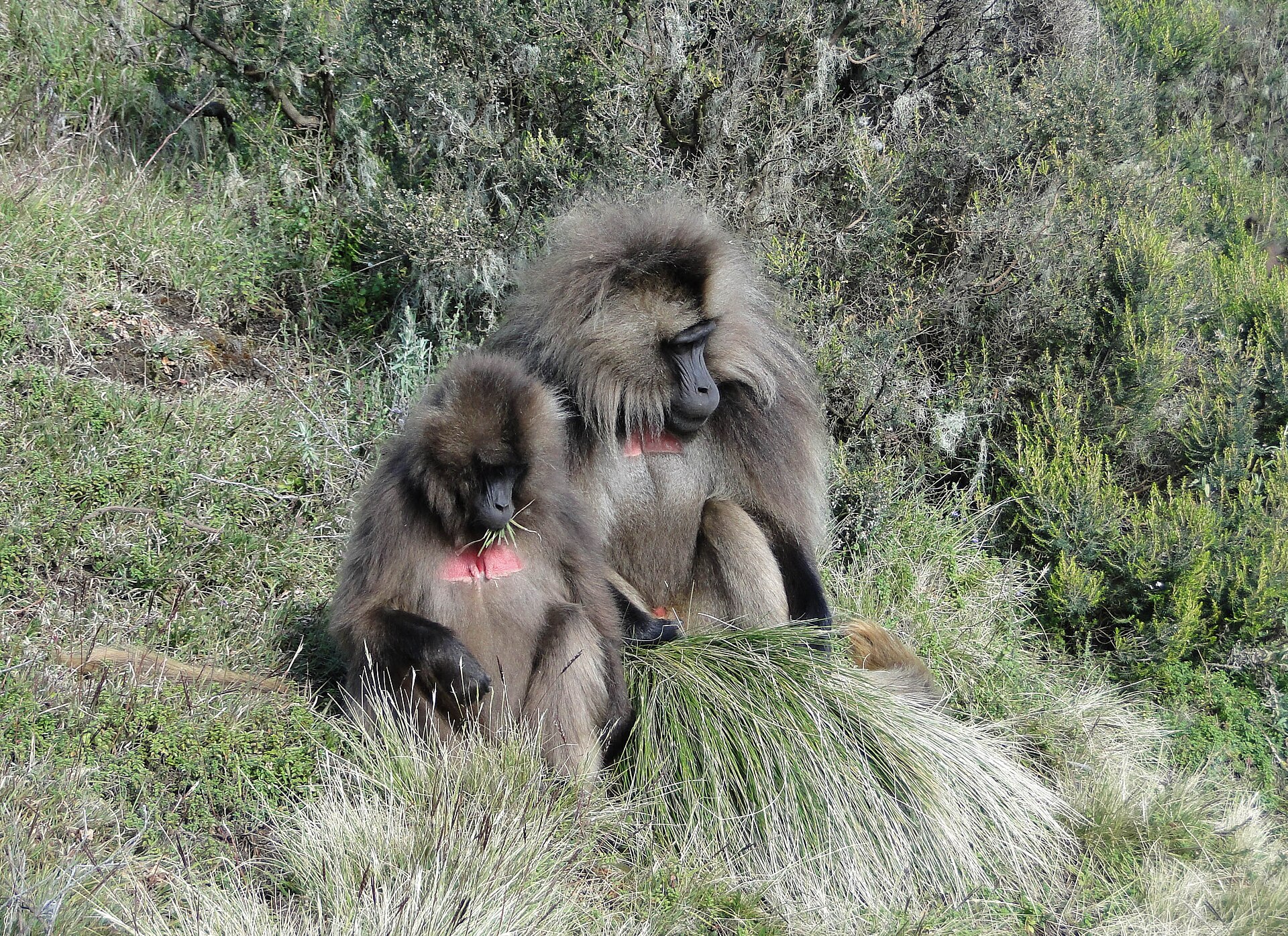
Ethiopia has more than 800 species of birds and many mammals. The animals found nowhere else, such as the Ethiopian wolf, the gelada and the walia ibex, are described in Ethiopia’s endemic animals. The best places to see them are the Bale Mountains, home of the Ethiopian wolf, and the Simien Mountains, home of the gelada and the walia.
Mammals
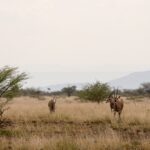
Lowland parks such as Awash National Park have antelopes, including the beisa oryx, as well as baboons, warthogs and many birds. In the forests of the south-west and the Bale Mountains you may see Menelik’s bushbuck, the mountain nyala and the colobus monkey. In Harar, spotted hyenas are fed by hand at night. Larger predators such as the leopard and lion still live in remote areas, but they are rarely seen by visitors.
Birds
Birdwatchers come for the combination of resident and migrant species. Many birds from Europe and Asia spend the northern winter in Ethiopia, which boosts the numbers between October and March. Some birds, such as the Abyssinian catbird and the black-winged lovebird, live only in the highlands of Ethiopia and neighbouring Eritrea. Lake Tana and the lakes of the Rift Valley are good places to look for water birds, pelicans and storks.
Reptiles and water animals
Hippos and crocodiles live in several lakes and rivers, including Lake Tana, the lakes of the Rift Valley and the Omo and Awash rivers. Keep well away from the water’s edge and follow the advice of local guides.
Threats
Many animals are under pressure. Farming and grazing move higher into the mountains, forests are cut for fuel and land, and hunting, disease from domestic dogs and climate change add to the problem. National parks, community conservation and responsible tourism help to protect the places where the wildlife lives.
Watching wildlife responsibly
- Hire a local guide or scout. Parks often require one, and they know where the animals are.
- Keep your distance. Never feed wildlife, including baboons and geladas. Never get close to an Ethiopian wolf or try to touch one.
- Stay on paths in fragile areas such as the Afroalpine plateau.
- Go in the dry season for easier walking and better visibility. See Ethiopian seasons.
- Dress for the altitude. Mountain mornings are cold, and the sun is strong.
Plan a trip to see more: Ethiopia’s national parks.