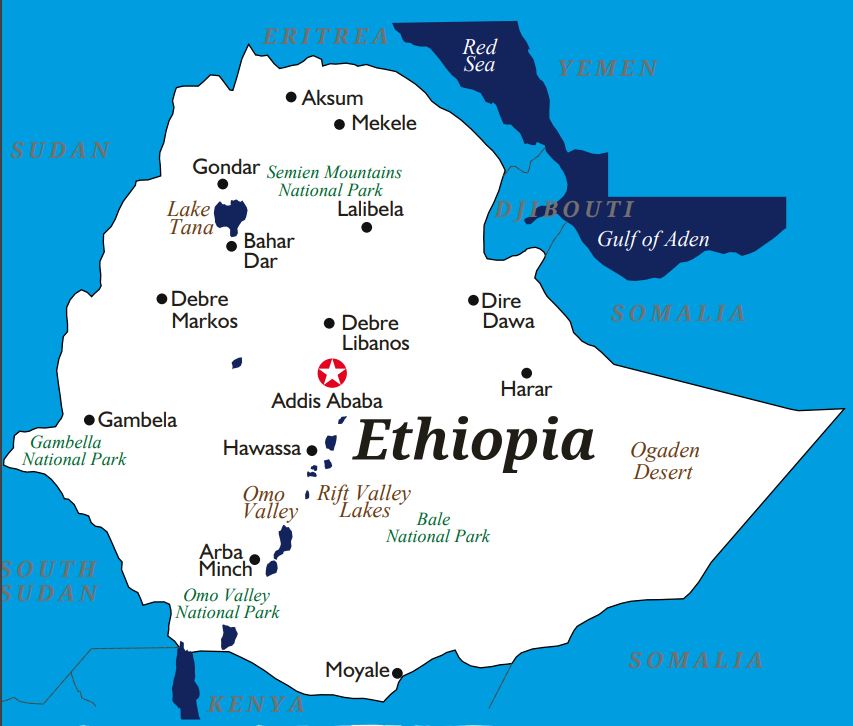
Ethiopia is one of the most diverse countries in Africa. It is home to well over 100 million people, who belong to dozens of ethnic groups and speak more than 80 languages. A visitor who travels from Addis Ababa to Harar, the Omo Valley or the northern highlands meets different languages, foods, clothes and traditions in each place. This page gives a short introduction to the people of Ethiopia and to the customs that are shared across the country.
Main groups and languages
The last national census, in 2007, is still the most widely quoted source for the size of the main groups, and the proportions have not been measured since. In that census, about a third of Ethiopians were Oromo and about a quarter were Amhara. Somali and Tigrayan people each made up about six percent, and the Sidama about four percent. Many other peoples, such as the Gurage, Wolayta, Hadiya, Afar and Gamo, live in the south and the east, and some groups in the south-west, such as those of the Omo Valley, have only a few thousand members.
Amharic is the working language of the federal government and is widely spoken as a second language. In 2020, Afar, Oromo, Somali and Tigrinya were added as working languages of the federal government, and each regional state uses its own language. Many people in cities speak some English, and signs in Addis Ababa are often written in Amharic and English. Learn a few words, since a greeting in Amharic is always appreciated. See Amharic phrases for travellers, the Ethiopian alphabet and religion and language.
Words you will hear
- Ferenji (also written farenji) means a foreigner and is widely used for any visitor. It is usually friendly rather than rude, and children may call it out as you pass.
- Habesha is a term used mainly by highland communities, particularly Amhara and Tigrayan people, to describe themselves and their culture. It is not used by everyone in Ethiopia, so “Ethiopian” is the safest word for a visitor.
Hospitality
Ethiopians are known for their hospitality, and many people enjoy welcoming visitors into their homes. A guest is usually offered coffee, and it is considered impolite to refuse the first cup. Hosts may insist that you eat more, and they often feed a guest by hand with a gursha, a mouthful of food placed in your mouth as a sign of respect and affection. See the coffee ceremony, being a guest in an Ethiopian home and gifts.
Greetings
Greetings are important and are not rushed. A common greeting is a handshake that ends with the shoulders touching, with a friendly look in the eye. Close friends may kiss on the cheeks several times, and it is customary to greet elders first, sometimes with a small bow. People ask about your health and family before getting to business. See how to greet people in Ethiopia.
Names and family
Ethiopians use a first name followed by the father’s first name, instead of a family name, so a person called Dawit Deggu has a father called Deggu. Titles such as Ato (Mr), Woizero (Mrs) and Woizerit (Miss) go before the first name. Family ties are strong, and many people live in extended households. See Ethiopian names.
Religion and the weekly rhythm
In the 2007 census about 44 percent of Ethiopians were Orthodox Christian, about 34 percent were Muslim and about 19 percent were Protestant, with smaller groups following traditional religions and others. Many people wear a small cross on a cord around the neck. Many Orthodox Christians fast on Wednesdays and Fridays and eat no meat or dairy on those days, so restaurants serve fasting dishes. See Ethiopian fasting food. Many Muslims attend the main prayer around midday on Friday. People of different faiths live and celebrate together, as you can see at Eid, Meskel and Timkat. For the churches, see inside an Ethiopian Orthodox church.
Music, food and festivals
Each region has its own dances and musical instruments. Highland songs are tied to the krar and masenqo, and in the south and the east other styles are heard. See Ethiopian music and dance. Food also varies, and injera with stews is the best-known dish across much of the country. See Ethiopian dishes to try first and the festival guides.
Respectful behaviour
- Use your right hand, or both hands, when you give or receive something.
- Ask before you photograph people, and be ready to hear no.
- Dress modestly outside the capital and at religious sites.
- Do not compare ethnic groups or discuss politics unless your hosts raise it. Ethnic identity can be a sensitive subject.
- Be patient with questions about your family and age. They are a way of showing interest.
Last checked: 25 October 2026. Population figures come from the 2007 census; later figures are estimates.